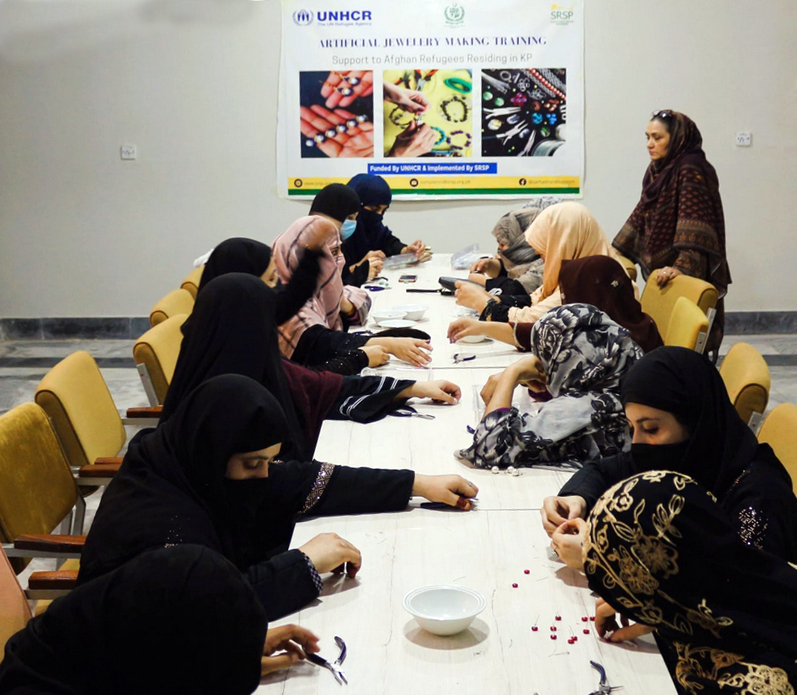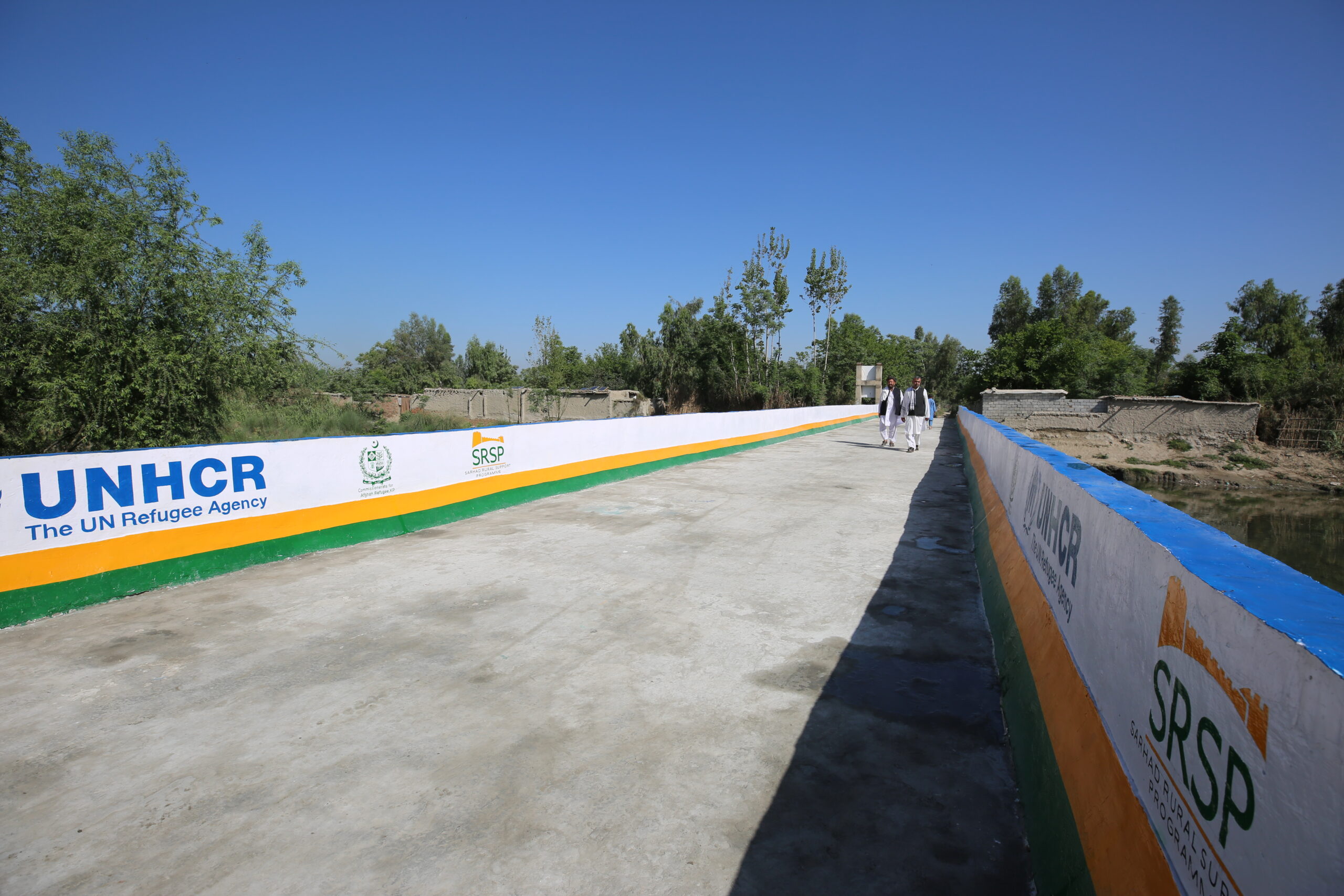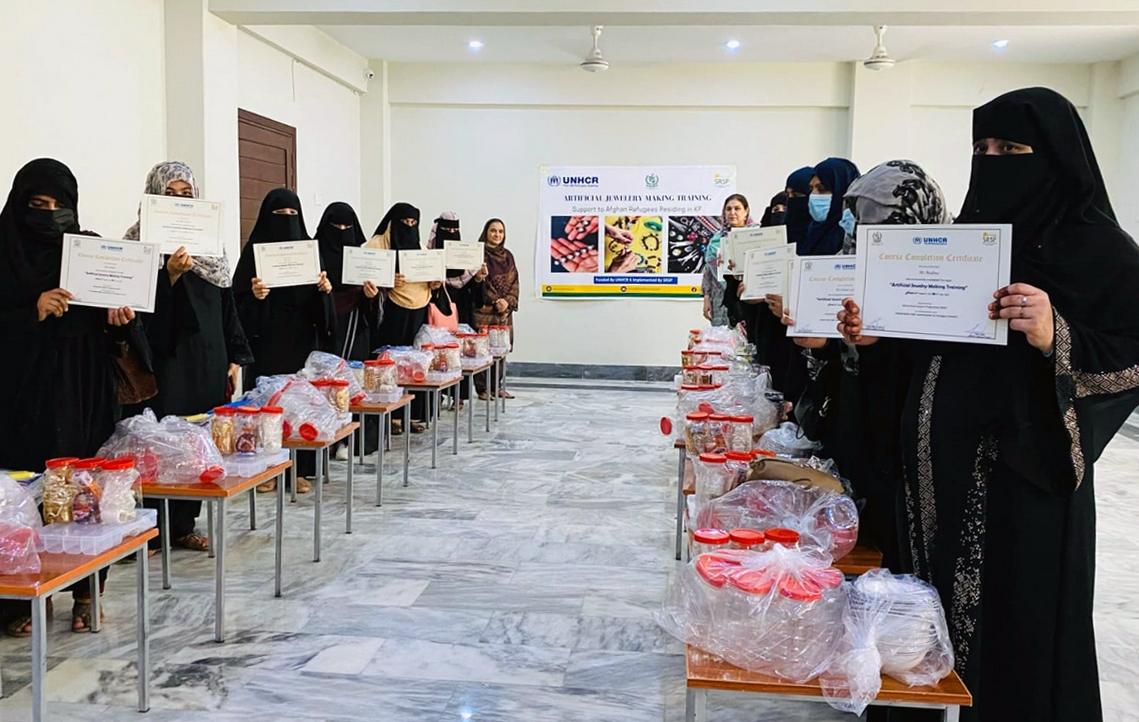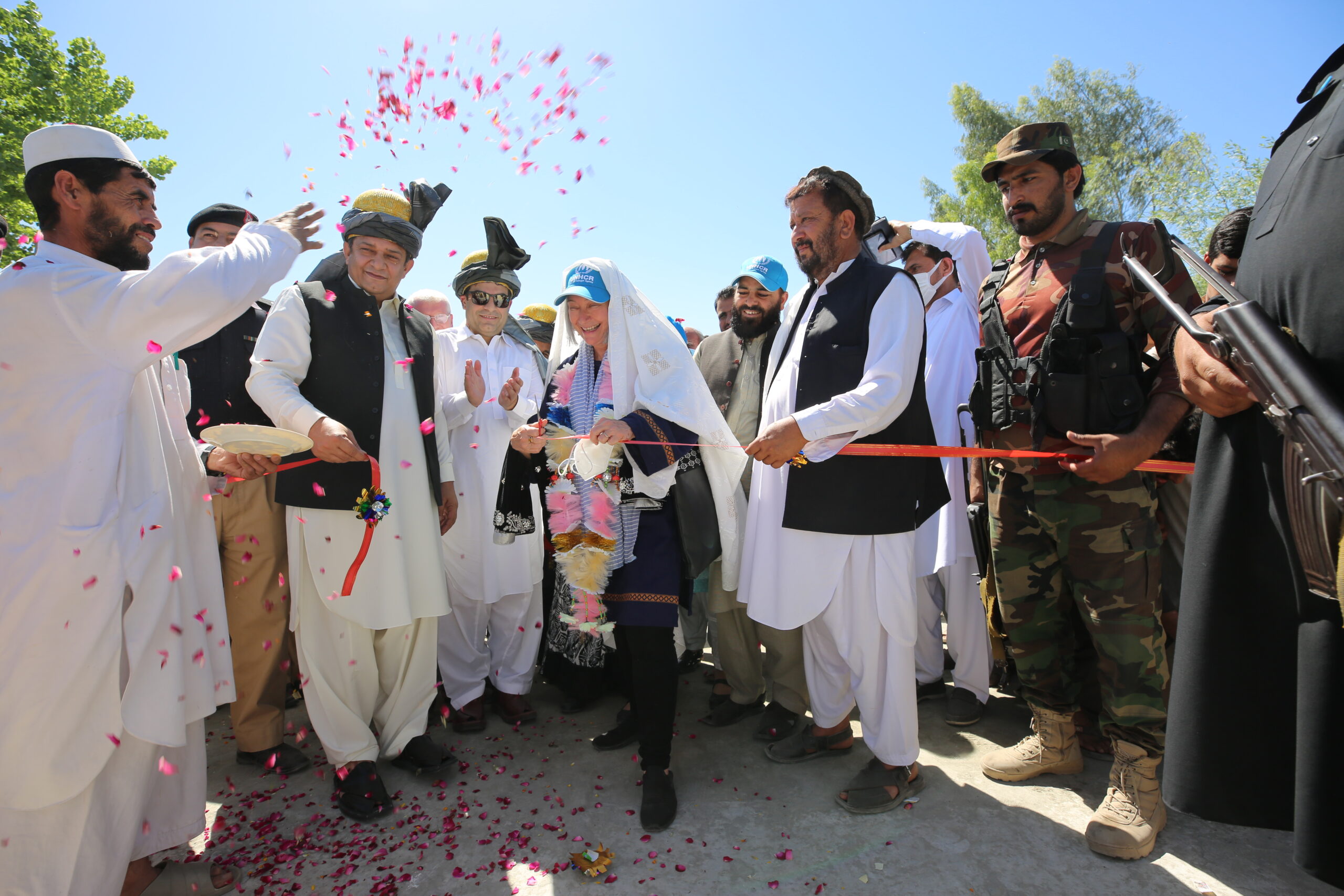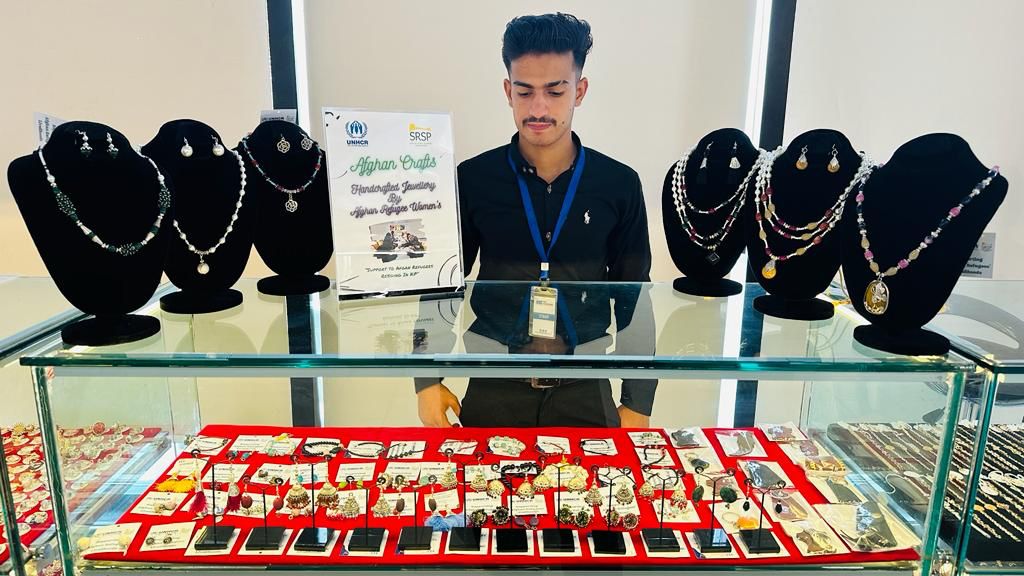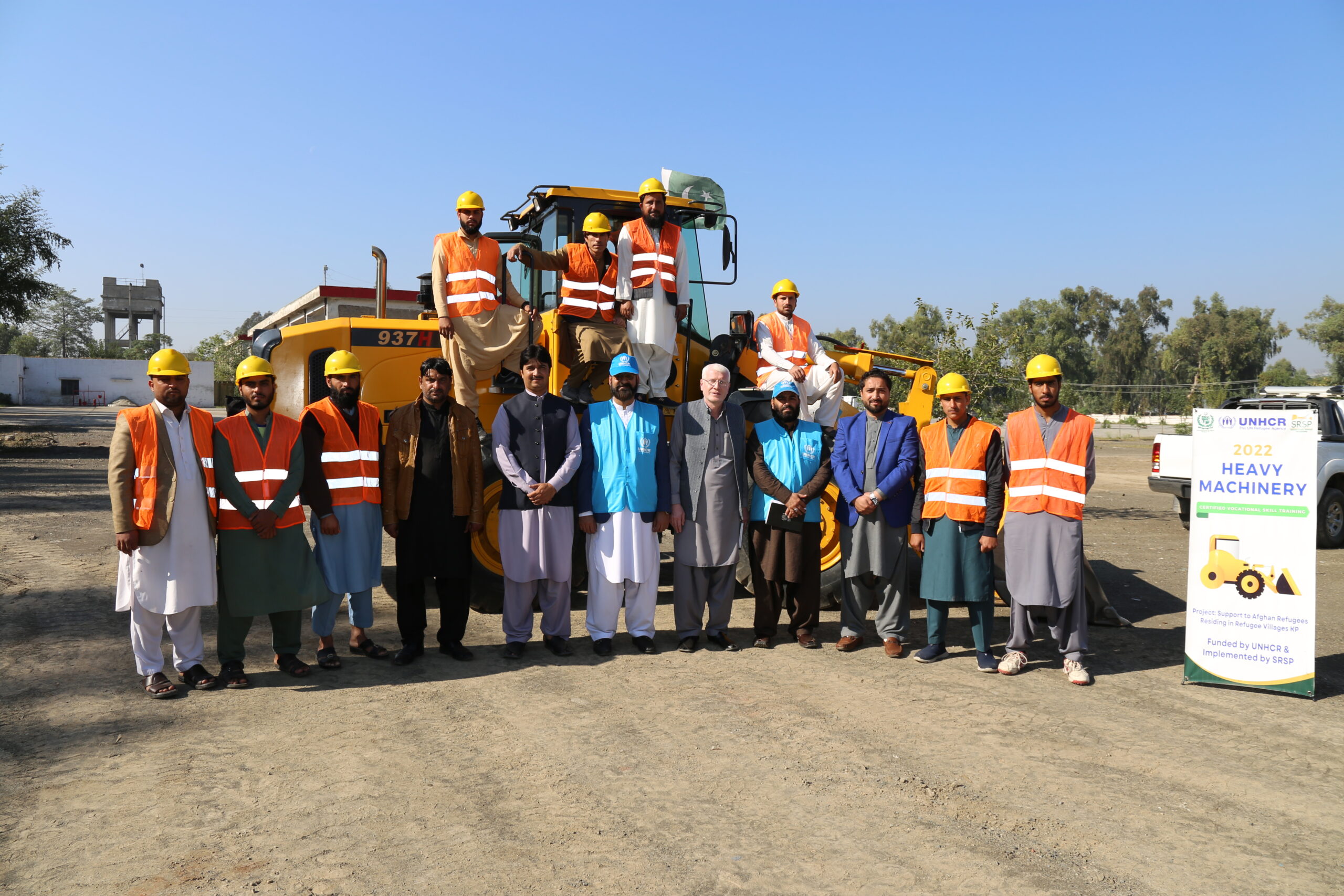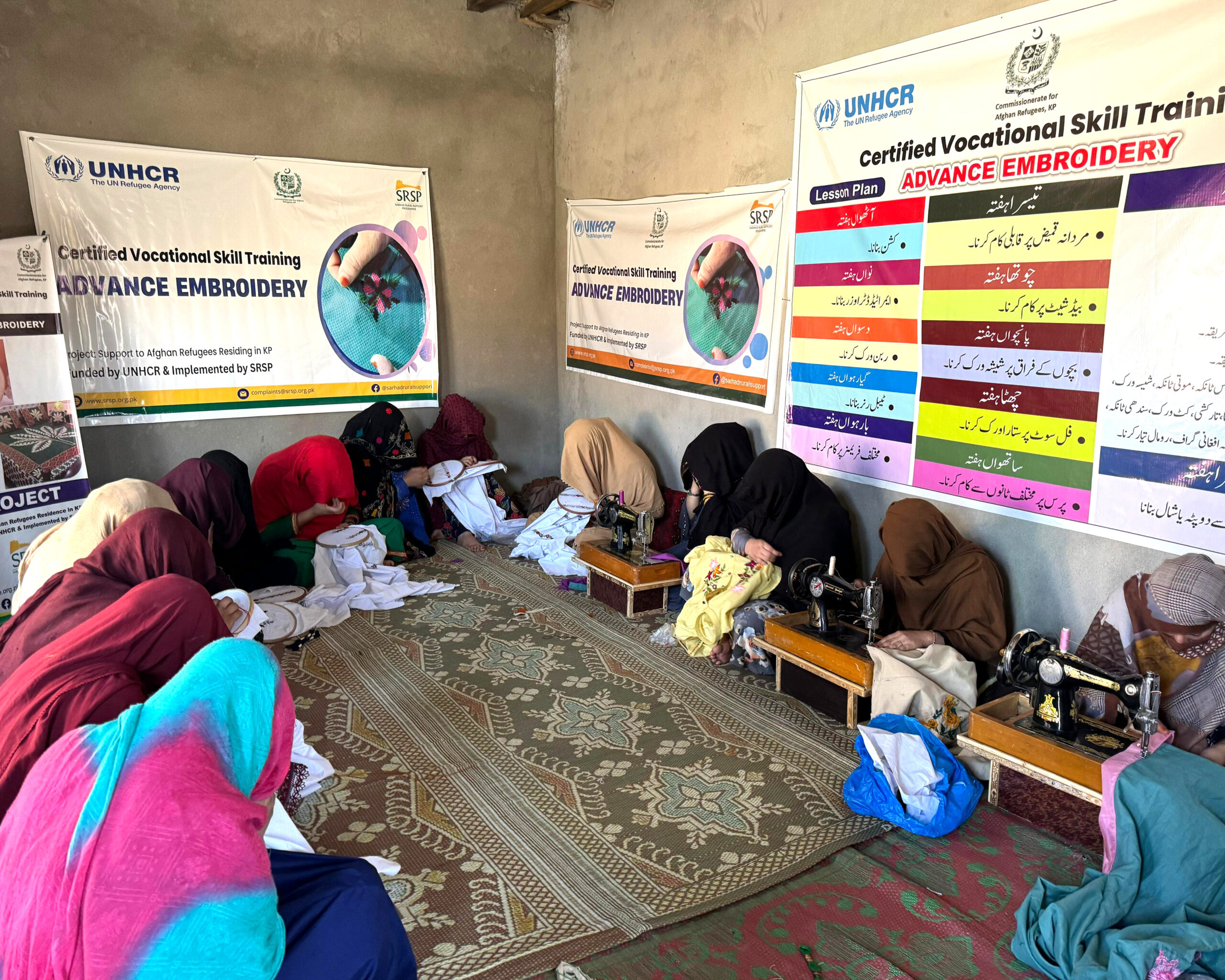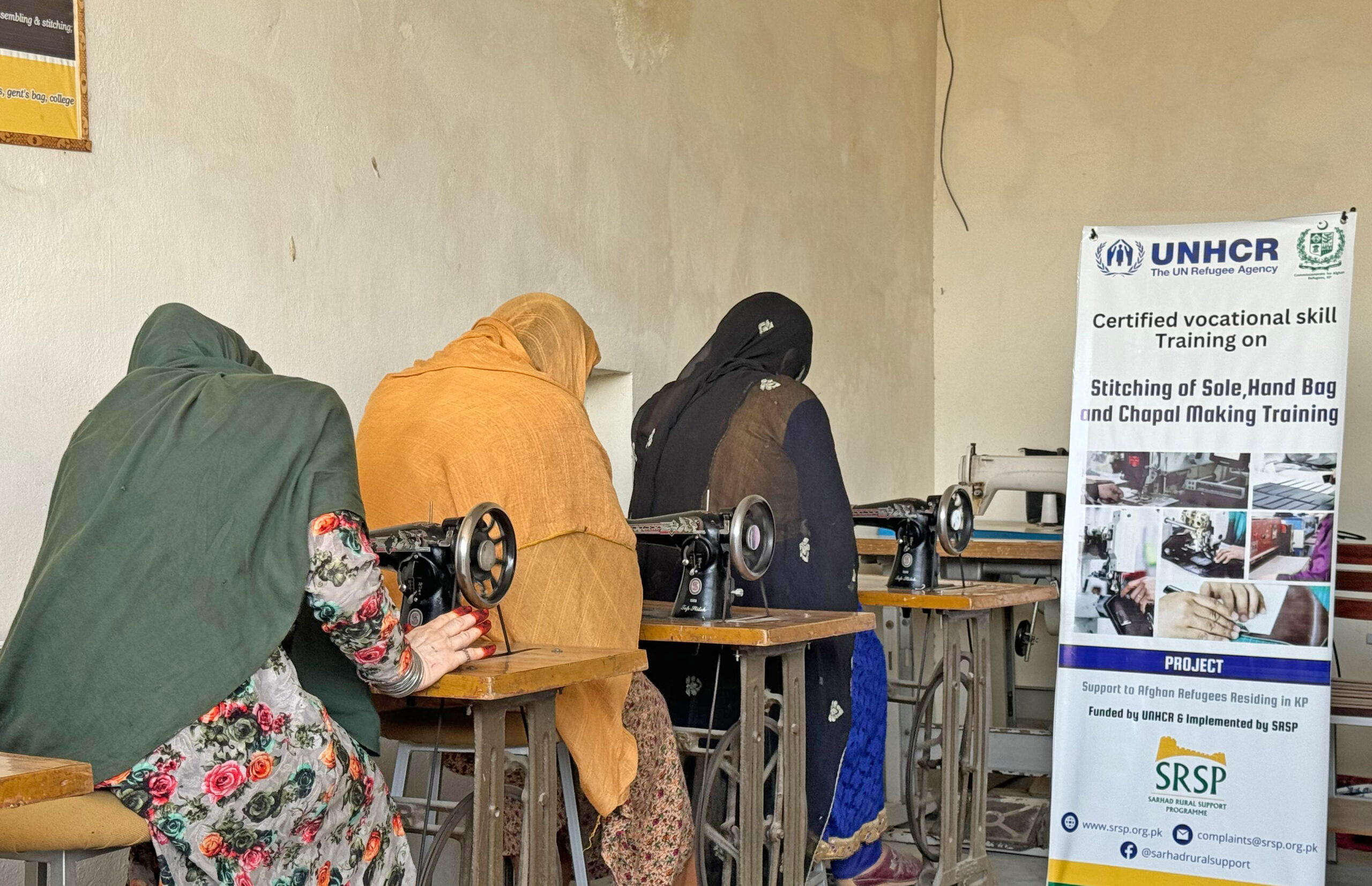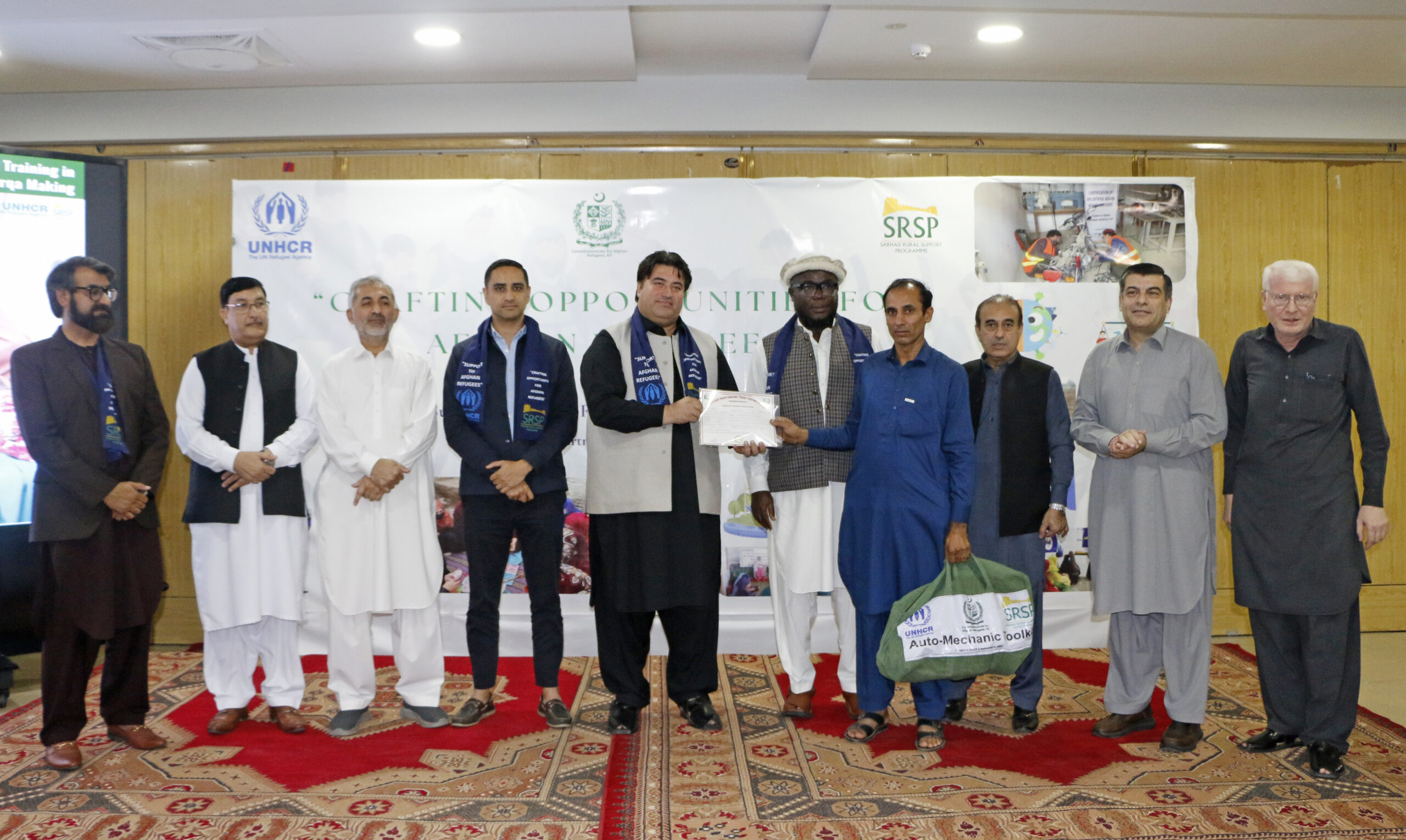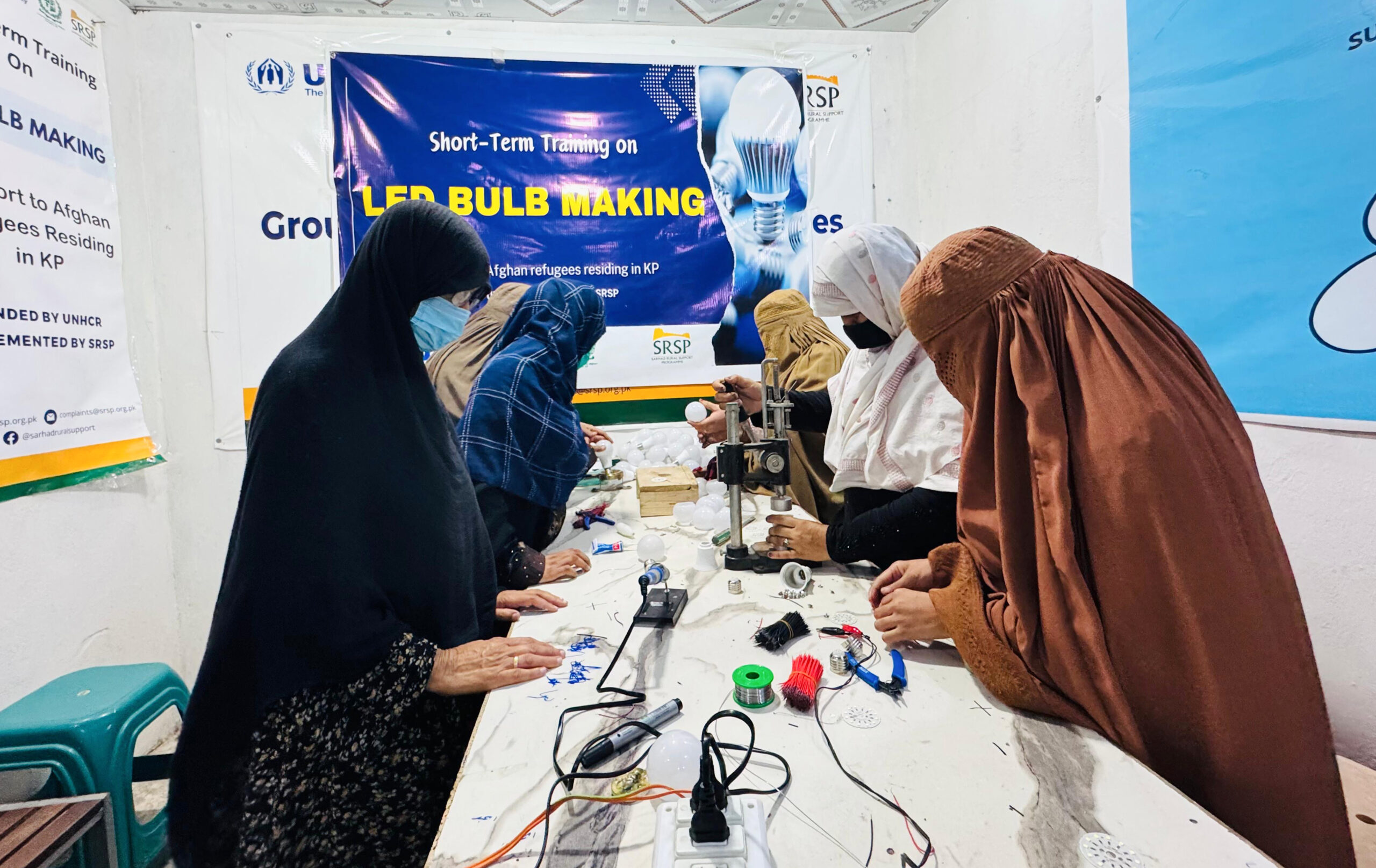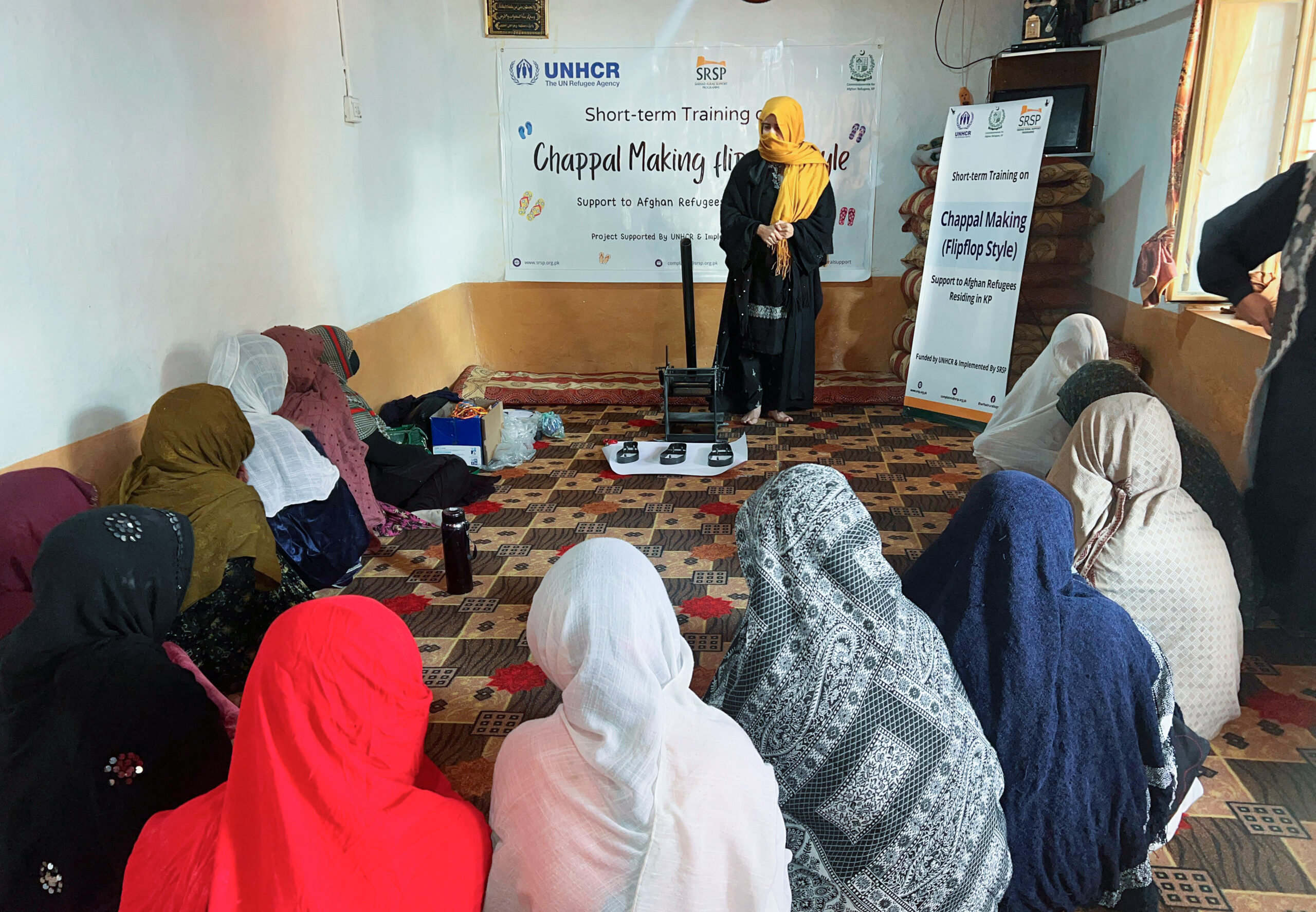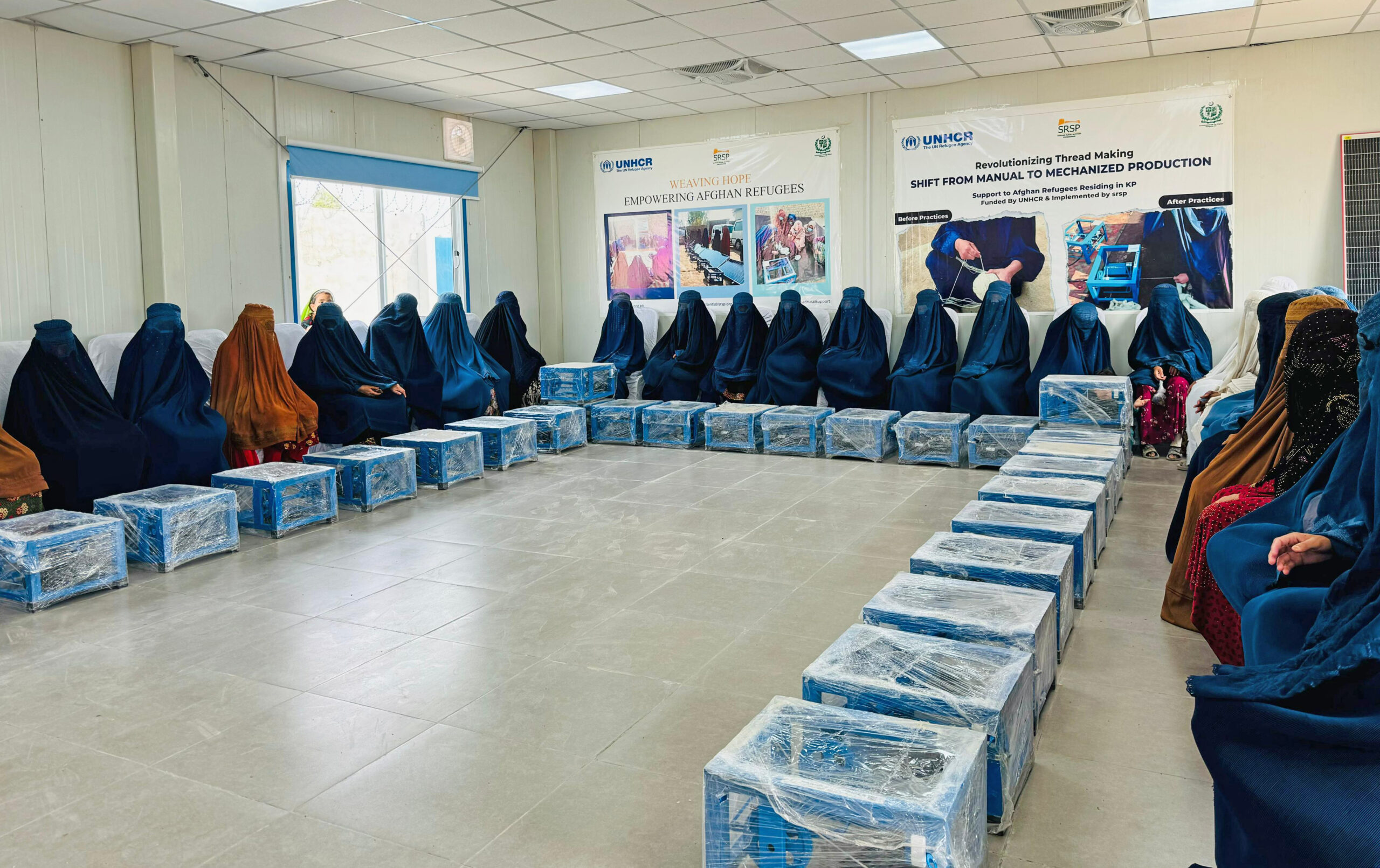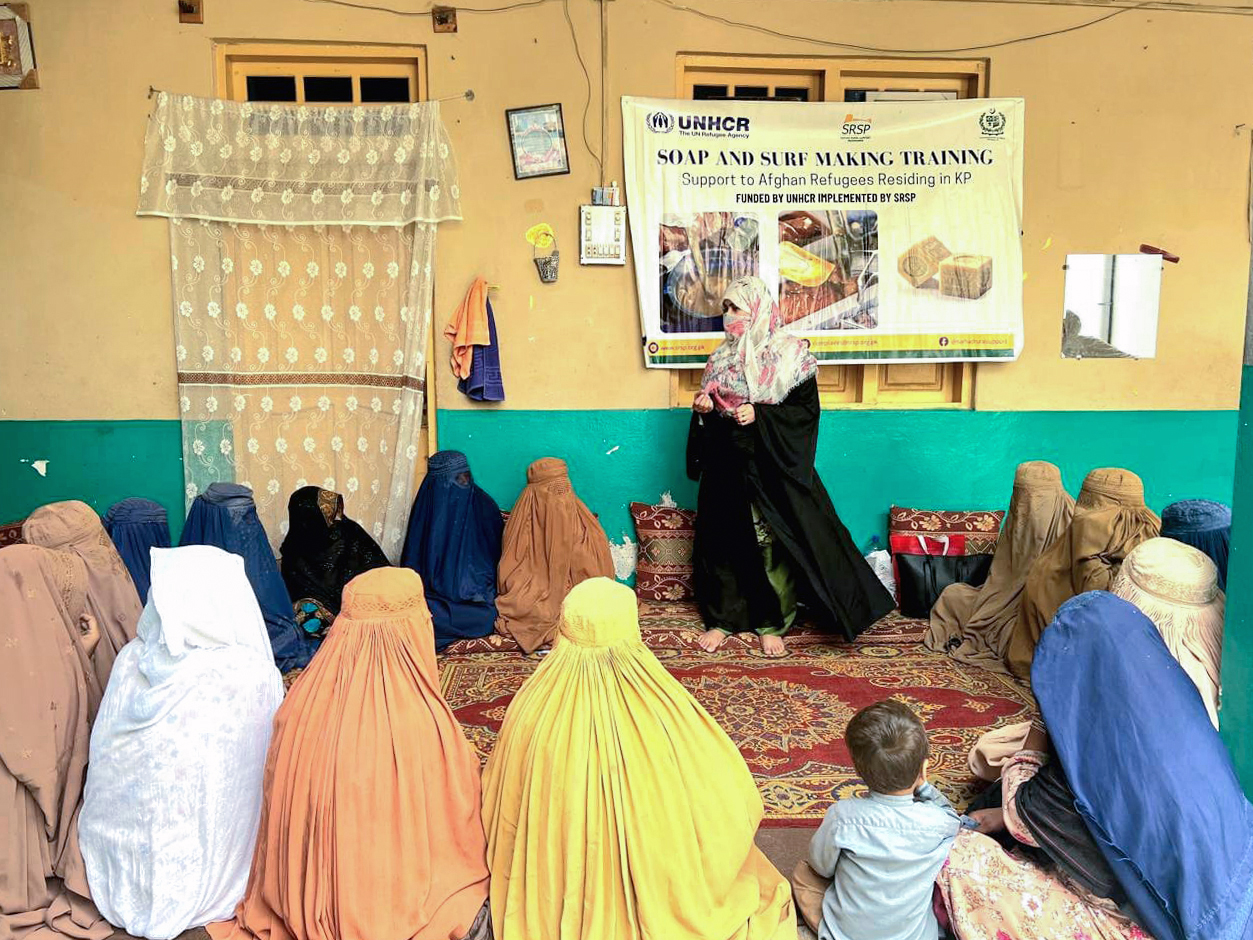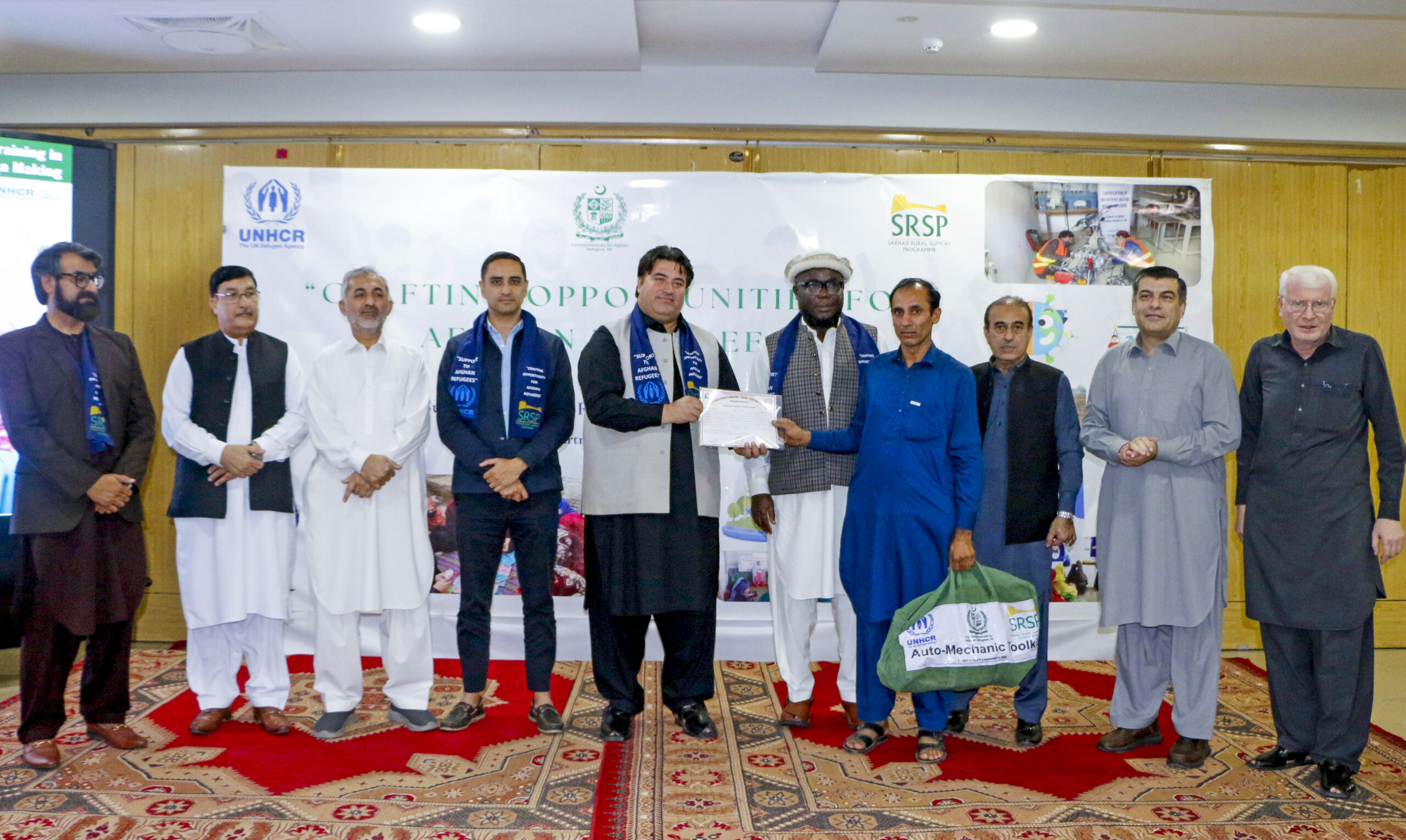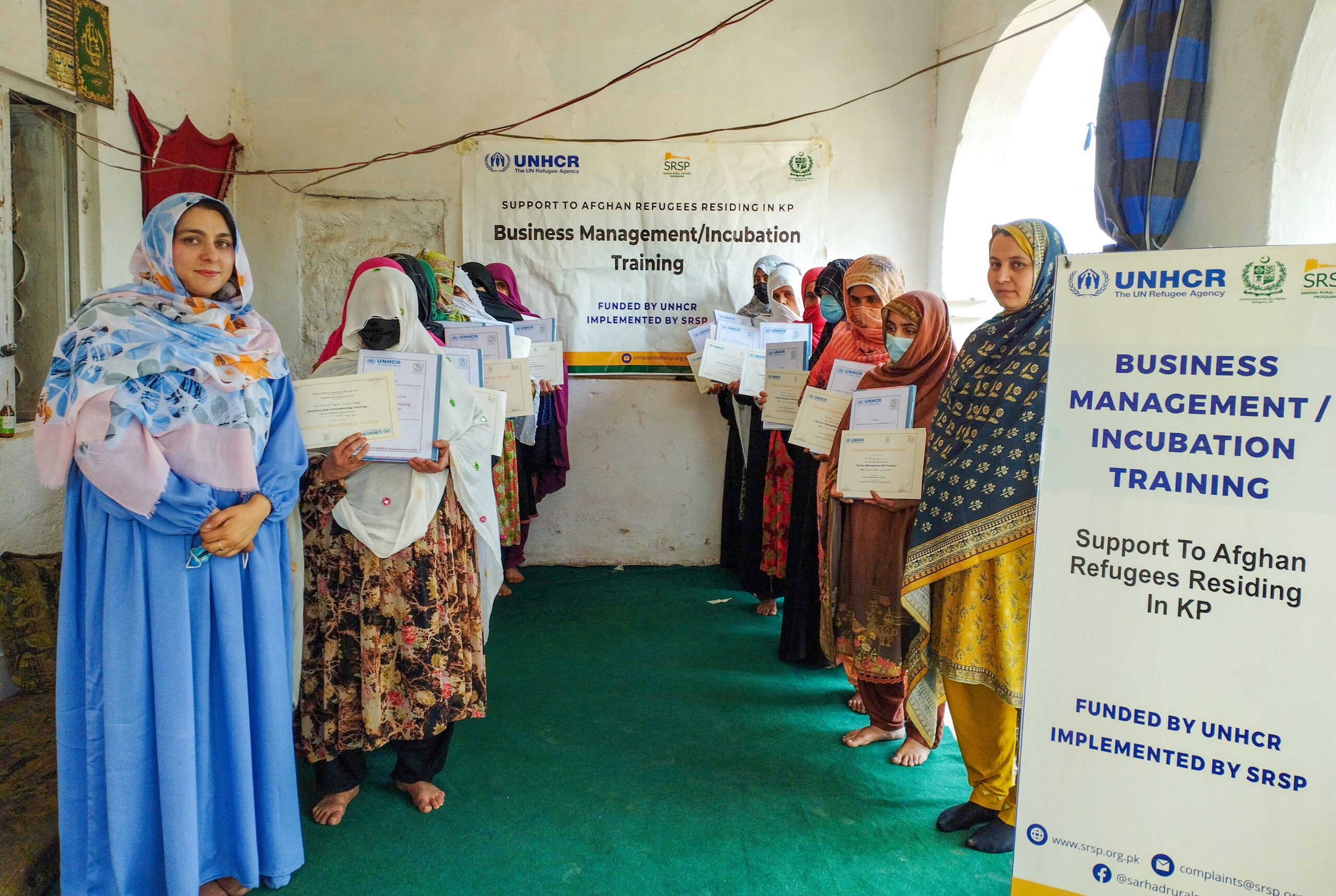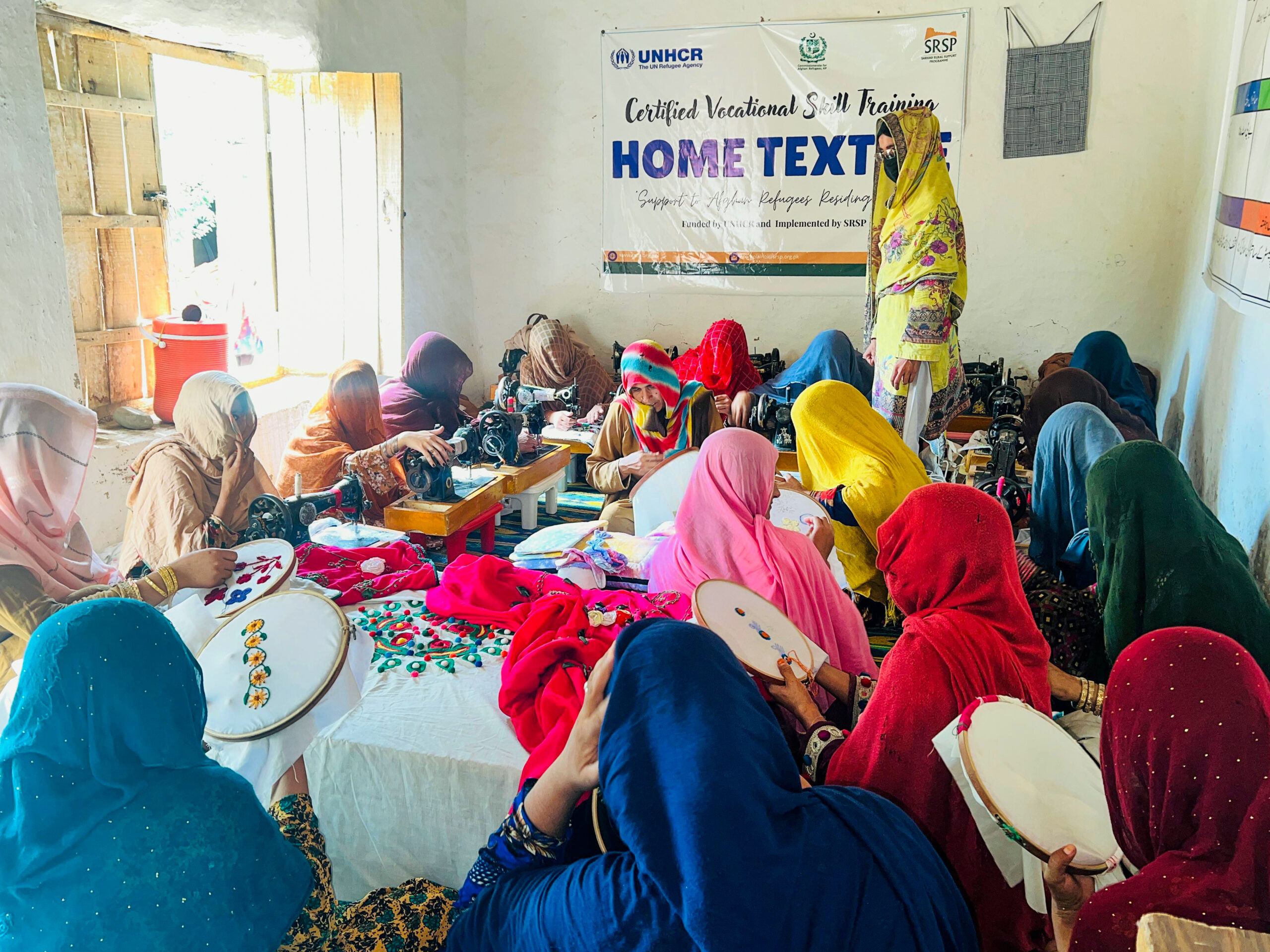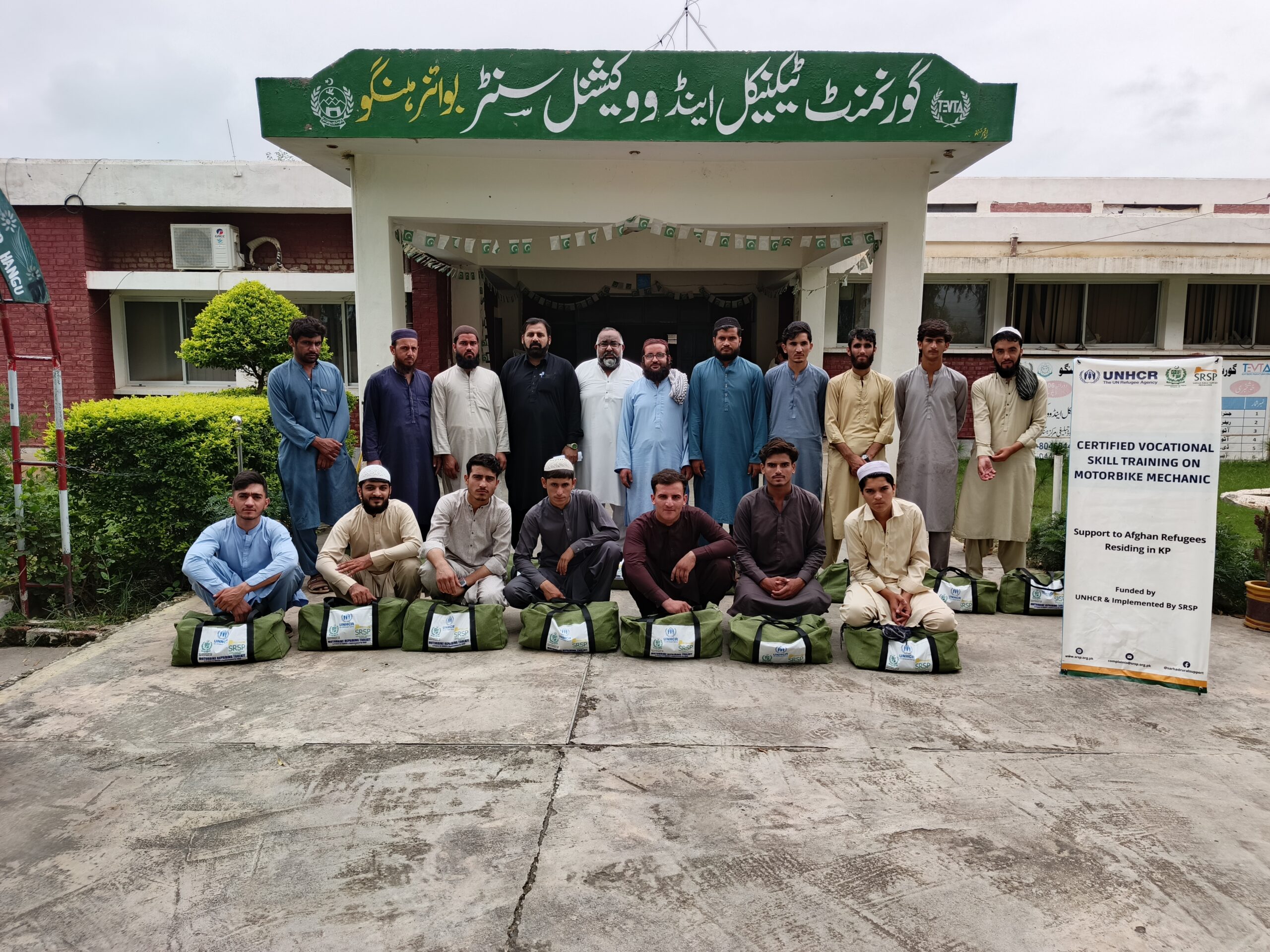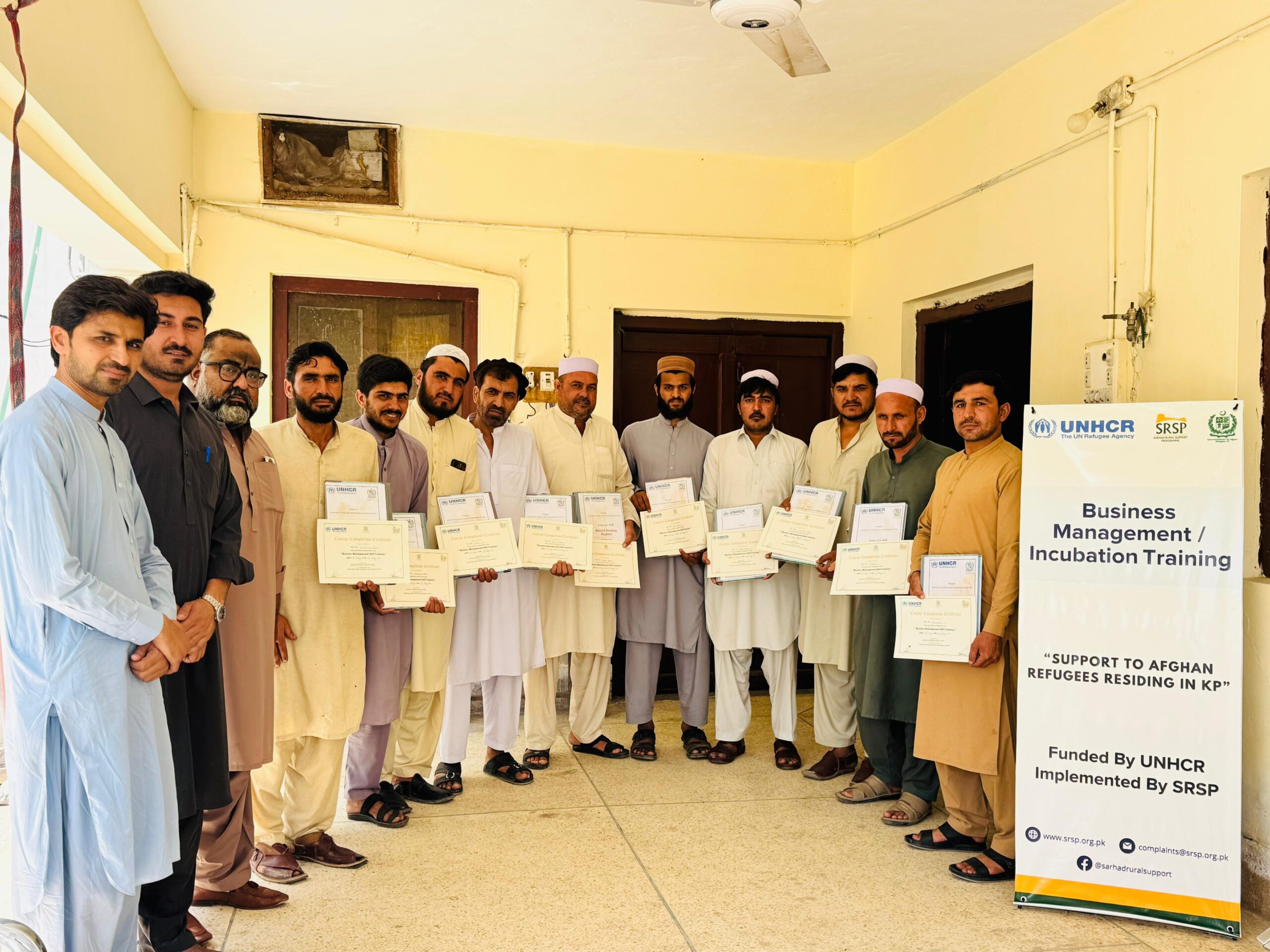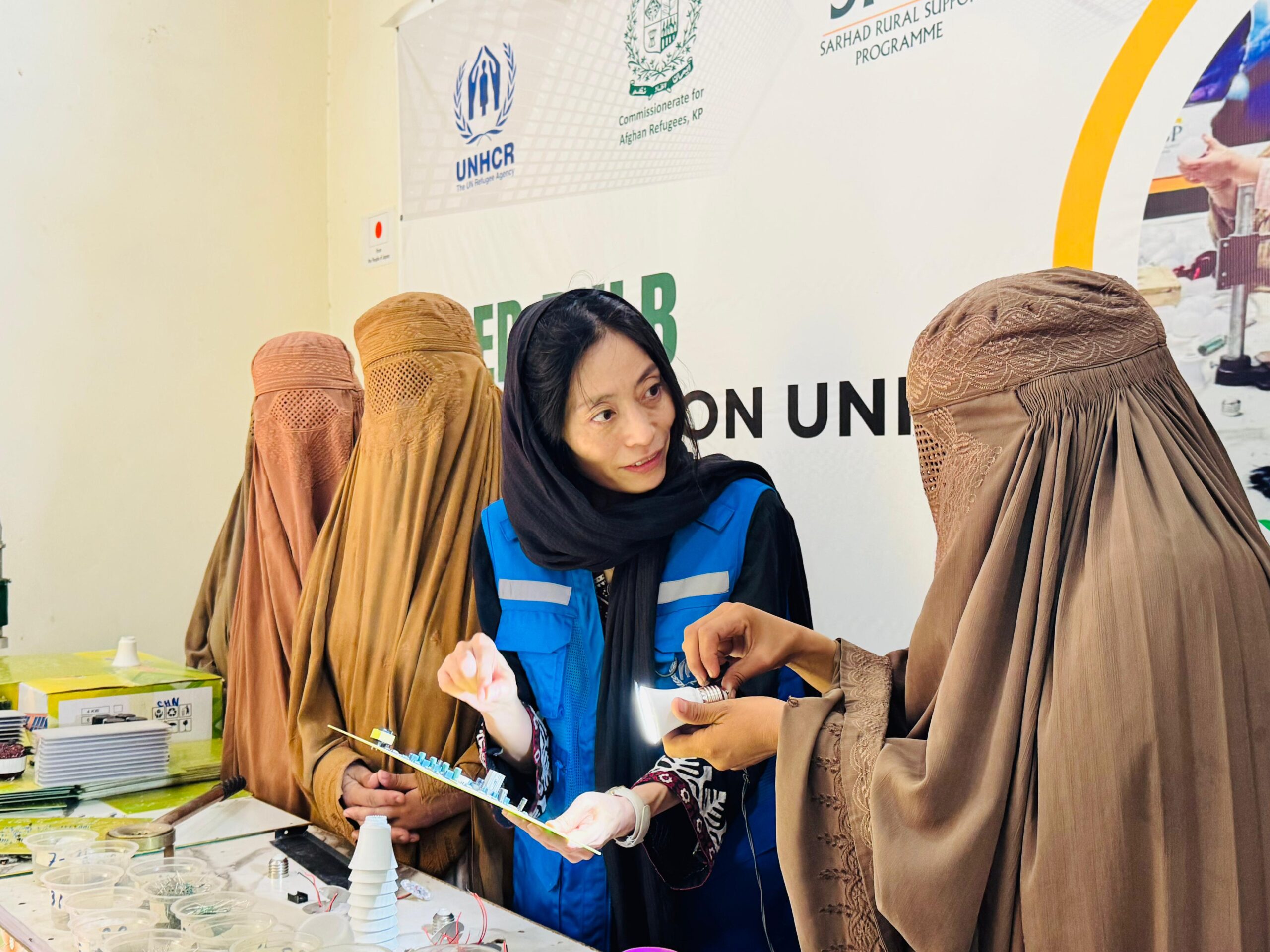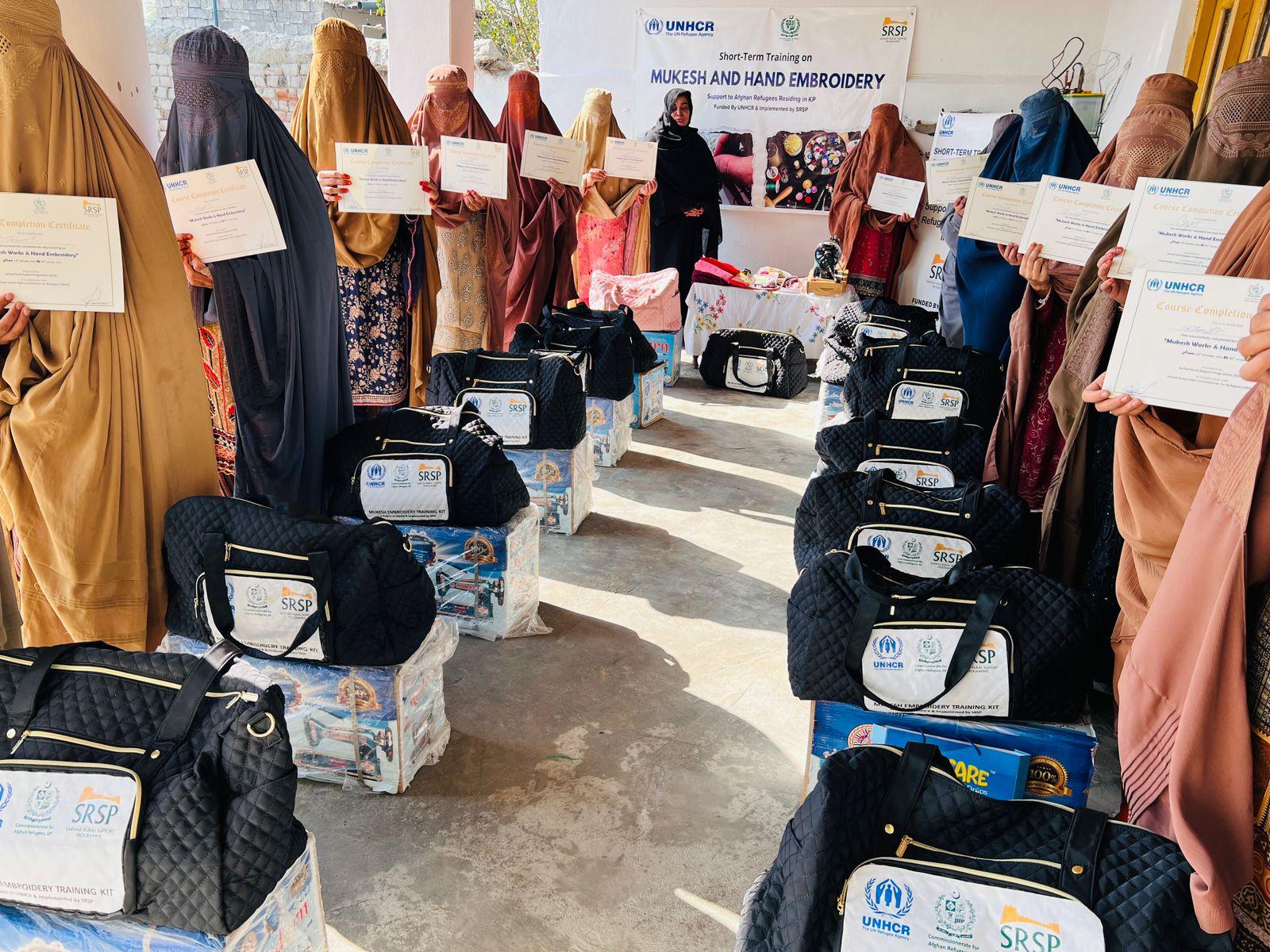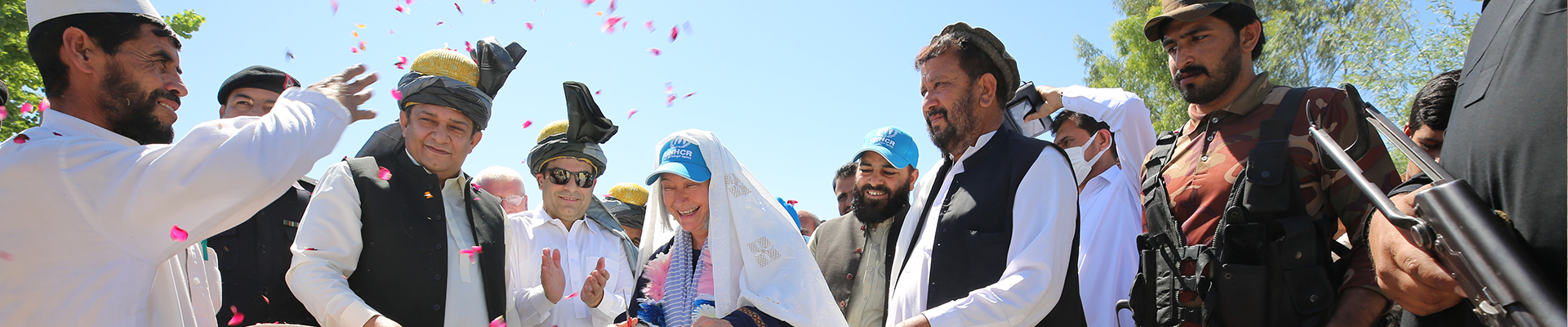


SRSP, with the financial support of UNHCR, implemented the Support to Afghan Refugees Residing in KP initiative across refugee villages (RVs) and urban clusters in Peshawar, Charsadda, Bannu, D.I. Khan, Hangu, Kohat, Laki Marwat, and Chitral. The project—implemented through consecutive annual cycles—aims to strengthen the economic self-reliance of Afghan refugees by expanding access to certified skills training, income-generating opportunities, enterprise development support, and structured apprenticeships.
Through a comprehensive livelihoods package, the project addresses the intersecting challenges of unemployment, informality, and limited market access faced by Afghan men, women, and youth. The programme’s core strategy is built around three pillars:
Together, these interventions enhance employability, promote women’s economic empowerment, and foster durable livelihood solutions for refugee households.
Building on the previous year’s progress, the January–September 2025 cycle further expanded the programme’s outreach, with implementation progressing well across districts. As of mid-June 2025, results indicate strong momentum:
Progress to date:
While group business formation is underway, challenges such as limited market opportunities and mobility constraints for refugee women have affected the pace of implementation. SRSP continues to mitigate these challenges through strengthened market linkages, community mobilization, and partnerships with local businesses.