November 2022 – August 2024
Access to Justice / Alternative Dispute Resolution / Community Governance

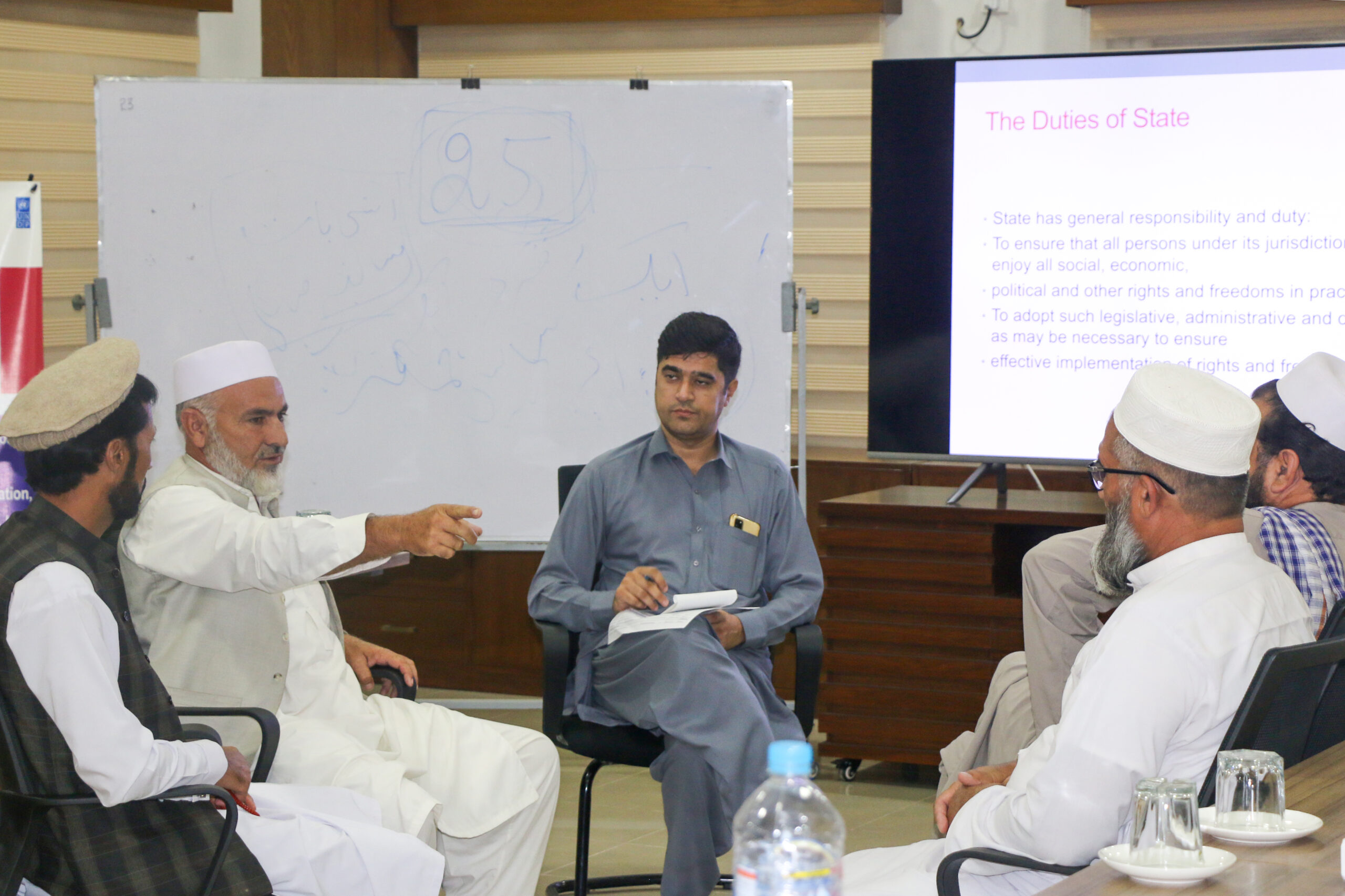
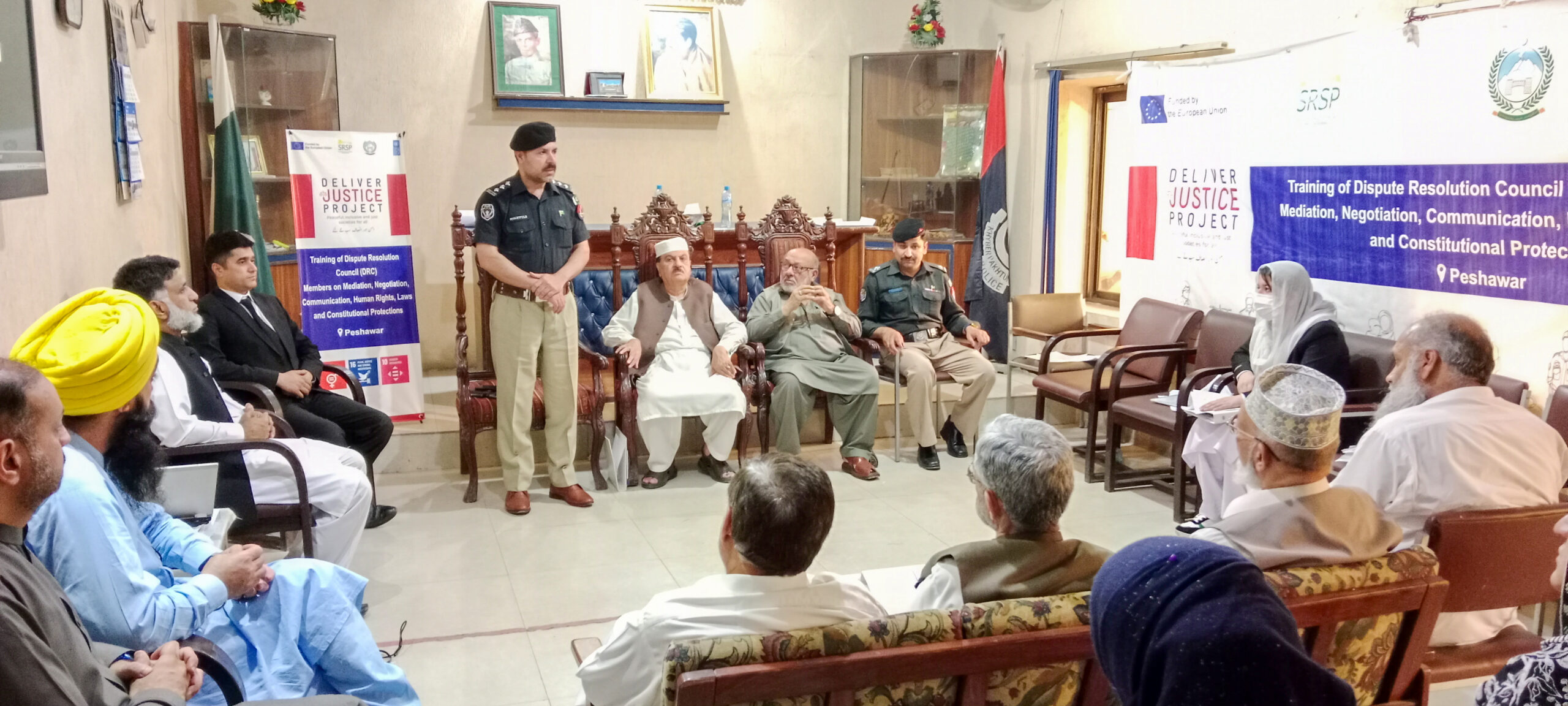
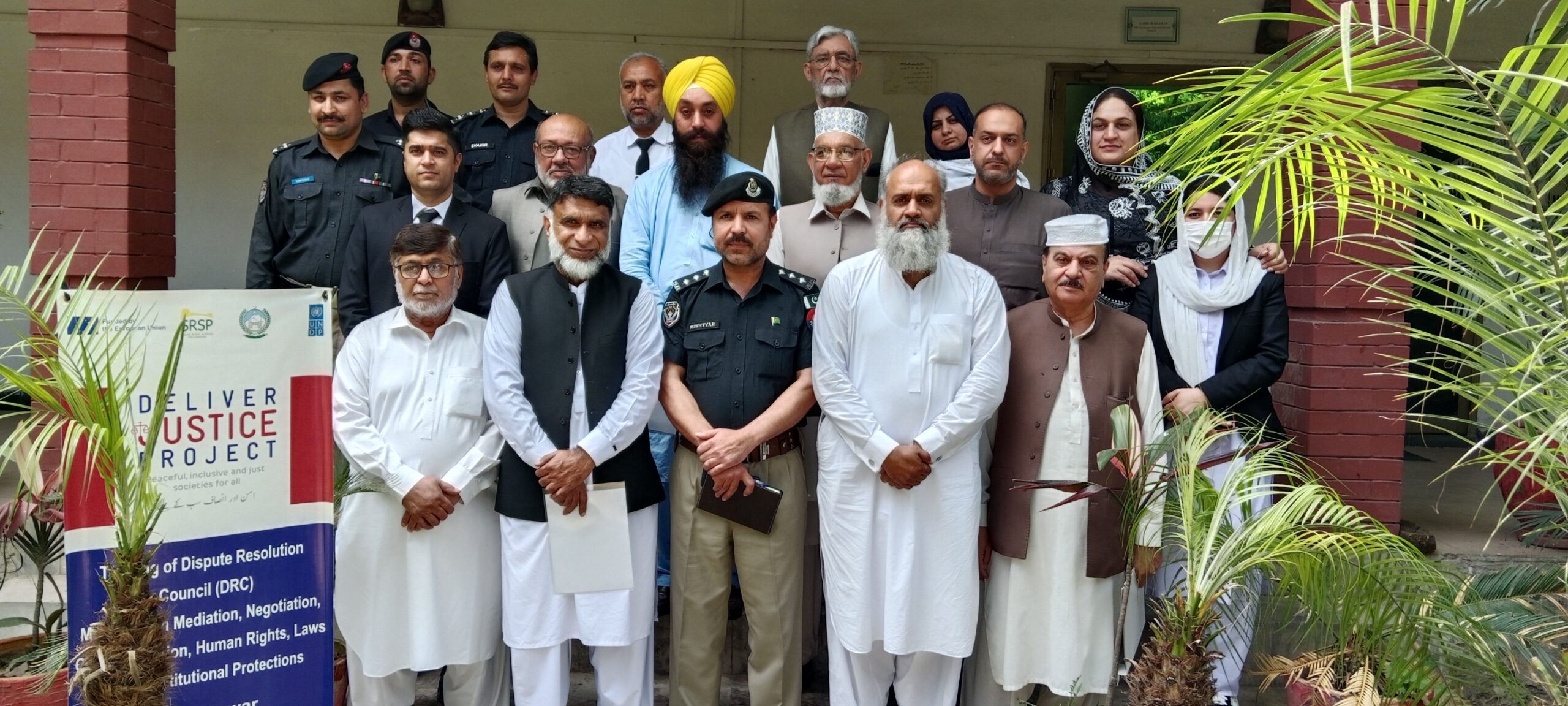
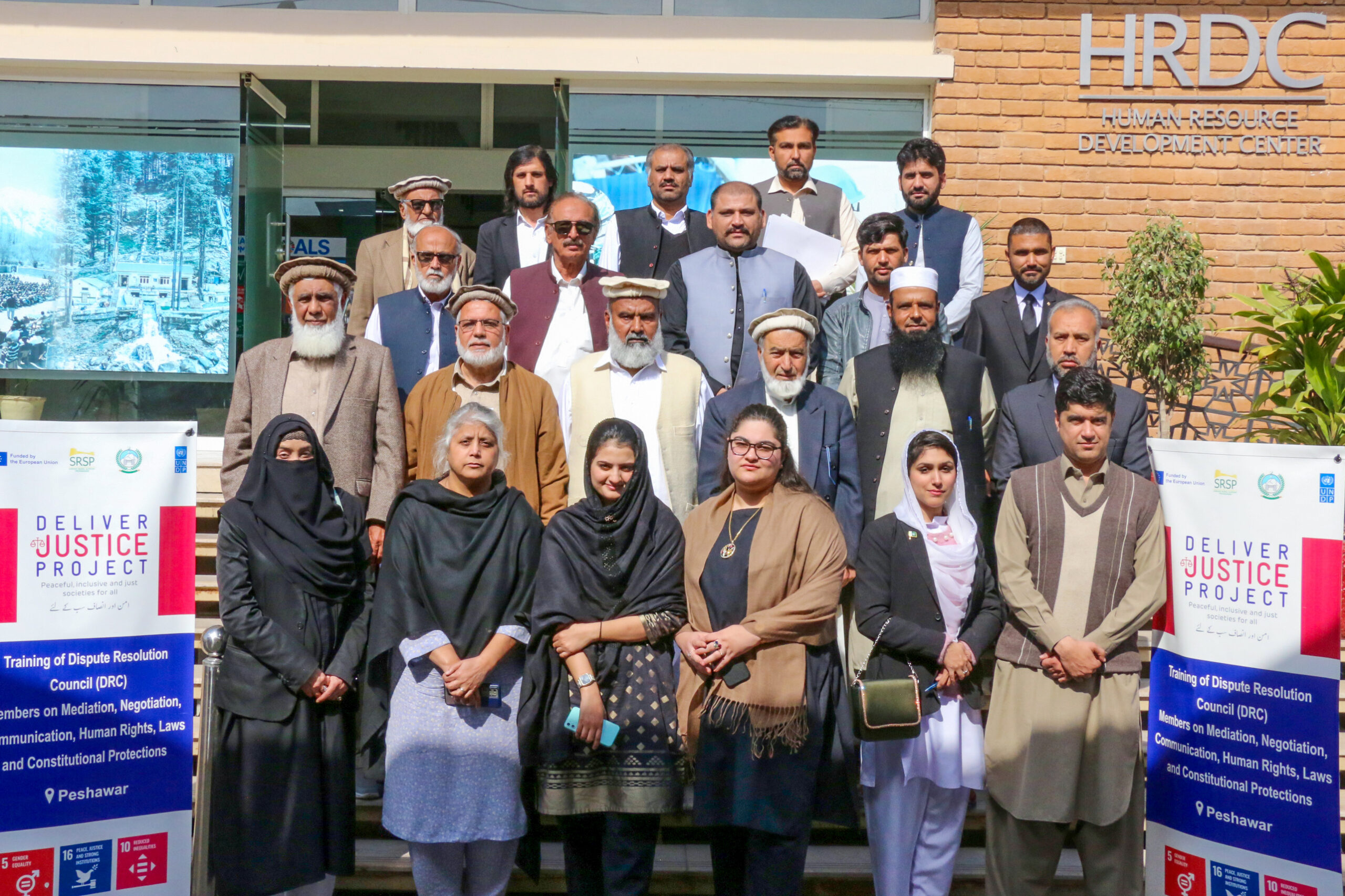
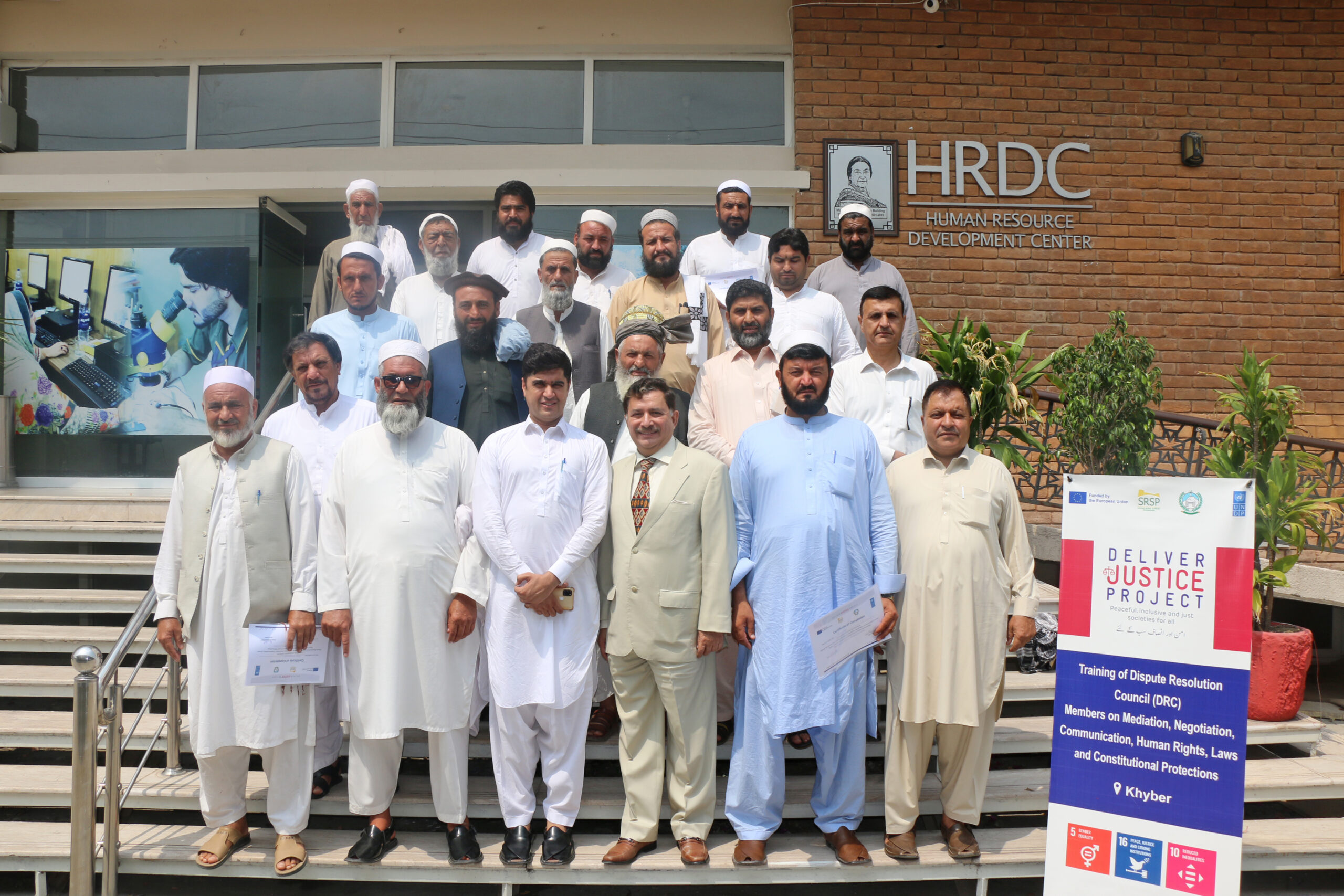
The Sarhad Rural Support Programme (SRSP), in partnership with the United Nations Development Programme (UNDP), successfully implemented the project “Training of Dispute Resolution Council (DRC) Members in Eight Districts of Khyber Pakhtunkhwa.”
The initiative aimed to strengthen community-level justice by enhancing the capacity and effectiveness of Alternative Dispute Resolution (ADR)mechanisms across the province. By equipping DRC members with standardized knowledge and practical skills, the project sought to improve the quality, fairness, and timeliness of dispute resolution while reducing pressure on formal court systems.
To strengthen institutional and technical capacities of Dispute Resolution Councils, enabling them to resolve conflicts in a fair, timely, people-centered, and rights-based manner, and to enhance public trust in community-based justice mechanisms.
The project significantly enhanced the effectiveness of Dispute Resolution Councils across Khyber Pakhtunkhwa by professionalizing mediation practices and standardizing ADR procedures. Trained DRC members are now better equipped to resolve disputes peacefully, prevent conflict escalation, and provide accessible justice at the community level. Overall, the initiative contributed to reduced burden on formal courts, improved social cohesion, and strengthened community trust in local justice mechanisms.