GBV Prevention & Response, Referral, Community Awareness
Funded By:
Project Brief
SRSP, in partnership with the IOM, has been implementing comprehensive GBV Prevention & Response projects across six districts of KP to support Afghan Citizen Card (ACC)-holder Afghan Refugee men, women and girls and vulnerable host communities. Operational in Peshawar, Charsadda, Nowshera, D.I. Khan, Swabi and Haripur, the projects aim to improve access to protection services, strengthen community-based protection mechanisms, and foster social and behavioural change by addressing harmful gender norms and violence.
A central feature of both project cycles is the establishment of Women and Girls Friendly Spaces (WGFS) within government health facilities in each district, providing safe, confidential, and trusted access to GBV case management, psychosocial support, referrals, and awareness services. Additionally, the projects integrate community-based protection systems, SASA! Together social norms transformation programming, and district-level referral pathway strengthening to ensure coordinated response services for survivors.
Project Achievements – 2024 Cycle (Concluded)
The 2024 concluded project saw accelerated progress and strong uptake of services across all target districts. All seven Women & Girls Friendly Spaces were established and fully operationalized. These centres recorded 23,248 client visits, demonstrating the significant demand for confidential support among Afghan refugees and host communities. SRSP strengthened six district-level referral pathways, enabling timely, survivor-centred linkages with health facilities, legal services, disability support, and psychosocial care. Through WGFS, the project provided 1,162 GBV case management services, nearly double the target, ensuring individualized care for survivors.
Community awareness and outreach activities expanded the project’s impact, with 50,546 individuals reached through community awareness sessions—far exceeding the target of 30,000. In addition, 9,877 individuals attended GBV Information Dialogue Sessions at WGFS. SRSP formed and strengthened 24 Community-Based Protection Groups (CBPGs), enhancing community-level detection, reporting, and support mechanisms. Protection monitoring activities were completed in all targeted districts.
The project also piloted the SASA! Together approach in Peshawar to address social norms that perpetuate violence against women. Key milestones included baseline assessments, mapping, selection and training of 36 community activists, 36 community leaders, and engagement of institutional allies. Community-led activities such as power-posters, community conversations, and leadership talking points created early momentum for behaviour and attitude change.
Project Achievements – 2025 Cycle (On-going)
The current 2025 cycle builds on the foundation laid during 2024, with continued service provision across all six districts. The seven WGFS remain active, receiving 9,488 clients in the first half of the year. Strengthening of referral pathways also continues, with all six district mechanisms fully functional. SRSP has provided 236 GBV case management services to survivors during the reporting period. At WGFS, 2,232 individuals participated in GBV prevention and response information sessions. Community-level awareness has reached 17,300 people, reinforcing knowledge on GBV, protection, and available services.
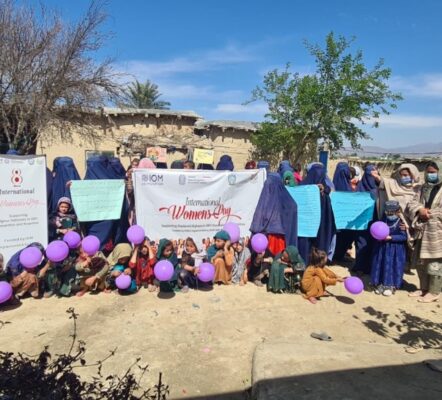
All 24 Community-Based Protection Groups remain active and are receiving on-going support. Protection monitoring activities have been initiated in two districts. Key international days related to gender equality and protection were commemorated at district level.
The SASA! Together programme continues to progress with strong community engagement. On-going support is being provided to 40 community activists and 40 community leaders, along with engagement of two institutional allies. Community activist and leader activities—including power posters, deeper-discussion sessions, talking points, and religious leader sensitization—are underway. Focus group discussions and learning/reflection sessions have been conducted at the end of the phase, with the final collaboration meeting planned.
Across both project cycles, SRSP has significantly strengthened GBV response capacity in refugee-hosting districts by operationalizing safe spaces, enhancing case management systems, and building community-level protective mechanisms. Thousands of Afghan refugee women and girls now have access to dignified support services that were previously unavailable or inaccessible. The SASA! Together social norms initiative—implemented for the first time in Peshawar under SRSP—has initiated meaningful dialogue on gender equality, power dynamics, and violence prevention. The formation and strengthening of CBPGs, combined with district referral pathways, is contributing to a more coordinated, survivor-centred protection ecosystem.