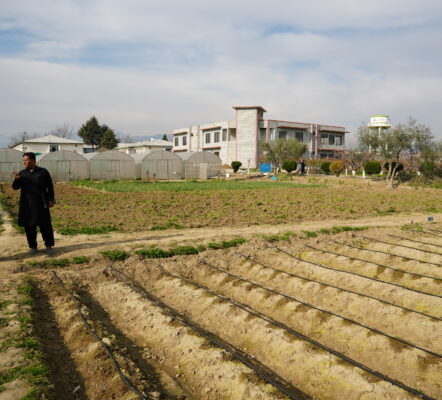
Pakistan, especially Khyber Pakhtunkhwa, is facing serious water shortages due to climate change, inefficient irrigation practices, and high energy costs. Most agriculture still relies on traditional flood irrigation, which wastes a large amount of water, damages crops, and consumes a lot of electricity or diesel.
The CF-WRAP Smart Irrigation project was designed to address this challenge by testing a modern, climate-smart irrigation solution that saves water, reduces energy use, and improves crop productivity. The project is implemented as a pilot so that lessons can be learned and shared for future scale-up.
Objective
The purpose of the project is to demonstrate how smart irrigation technologies can help improve water efficiency and agricultural productivity in a practical and affordable way. The project aims to generate evidence that can support policy decisions and future investments in climate-resilient agriculture.
The main objectives of the project are:
To introduce a solar-powered, smart drip irrigation system at a government agriculture research farm
To compare smart irrigation with traditional flood irrigation using a scientific approach
To reduce water use while maintaining or improving crop yield
To build capacity of government staff, farmers, and technicians in modern irrigation practices
To document lessons and develop a model that can be replicated across Khyber Pakhtunkhwa
What the Project Is Doing on the Ground
A pilot site was selected after assessing several Agriculture Research Stations across KP
ARI Takhtaband, Swat was chosen based on technical feasibility and institutional readiness
A peach orchard was selected for smart irrigation, with a comparable orchard under flood irrigation for comparison
Potato plots were also finalized for a Randomized Controlled Trial, one under drip irrigation and one under flood irrigation
The system includes solar energy, drip irrigation, and IoT sensors to monitor soil moisture and water use
A digital dashboard supports informed irrigation decisions
A Water User Group has already been formed to support ownership and sustainability
Expected Outcomes and Results
Through this pilot, the project expects to achieve:
Significant reduction in water use compared to flood irrigation
Improved irrigation efficiency and better crop health
Lower energy use due to solar-powered systems
Practical evidence on how smart irrigation performs under local conditions
Increased knowledge and skills of farmers, researchers, and government staff
A tested and documented model that can be scaled up in other districts
Why This Project Is Important
This project is important because it moves beyond planning and theory and shows how smart irrigation works in real field conditions. It combines government ownership, technical innovation, and farmer engagement. The lessons from this pilot can help guide future agriculture and water management policies in Pakistan.