March 27, 2024 – December 2025
Climate Resilience / Youth Livelihoods / Technical & Vocational Skills

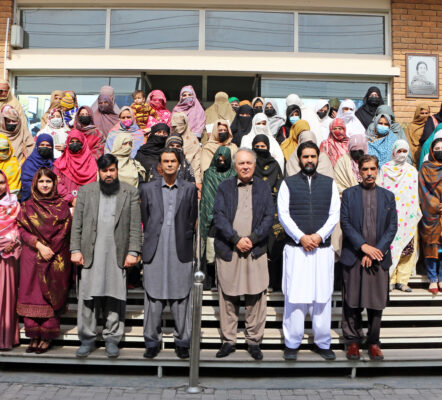
The Sarhad Rural Support Programme (SRSP), in partnership with CESVI Pakistan, successfully implemented the Climate Resilience Component of the Building Resilience and Addressing Vulnerability to Emergencies (BRAVE) Programme in District Charsadda.
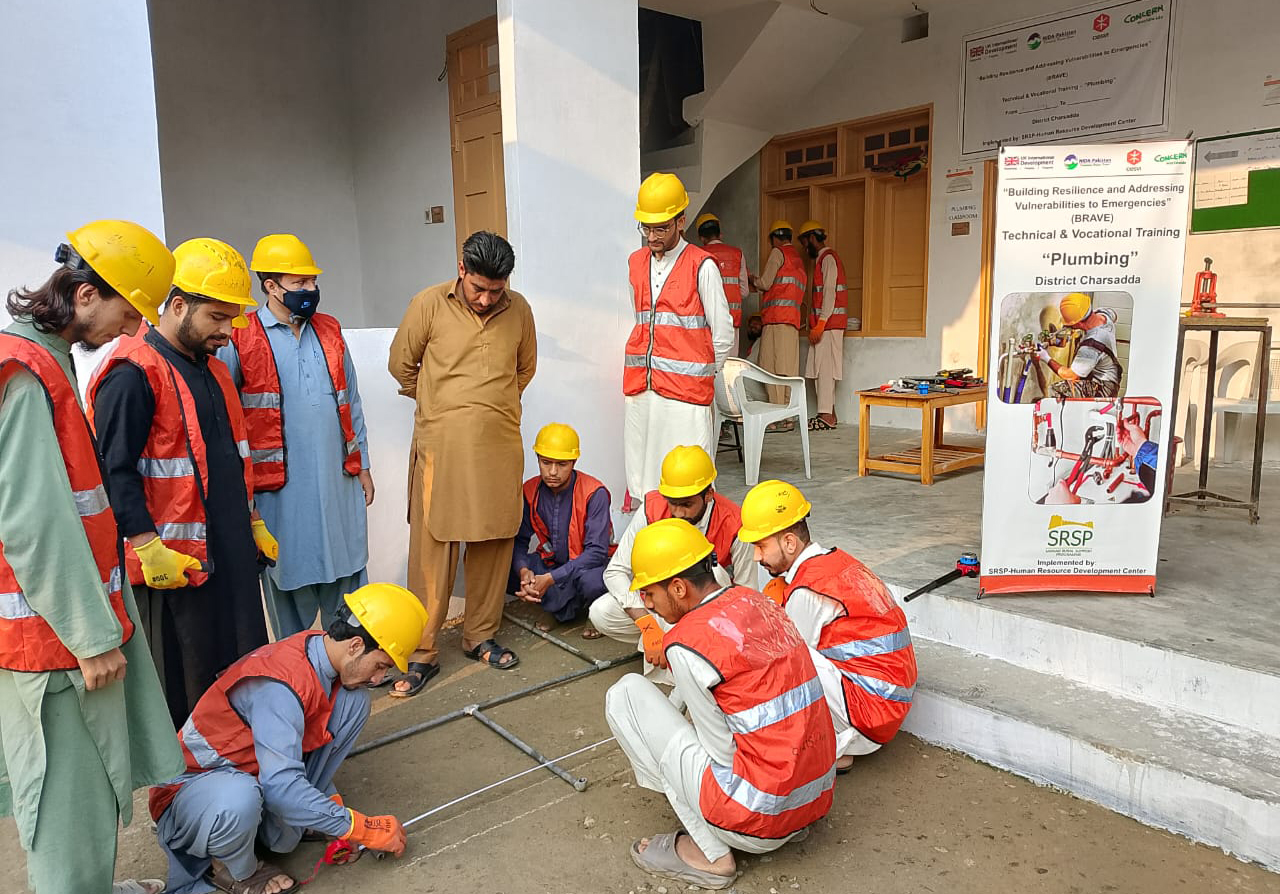
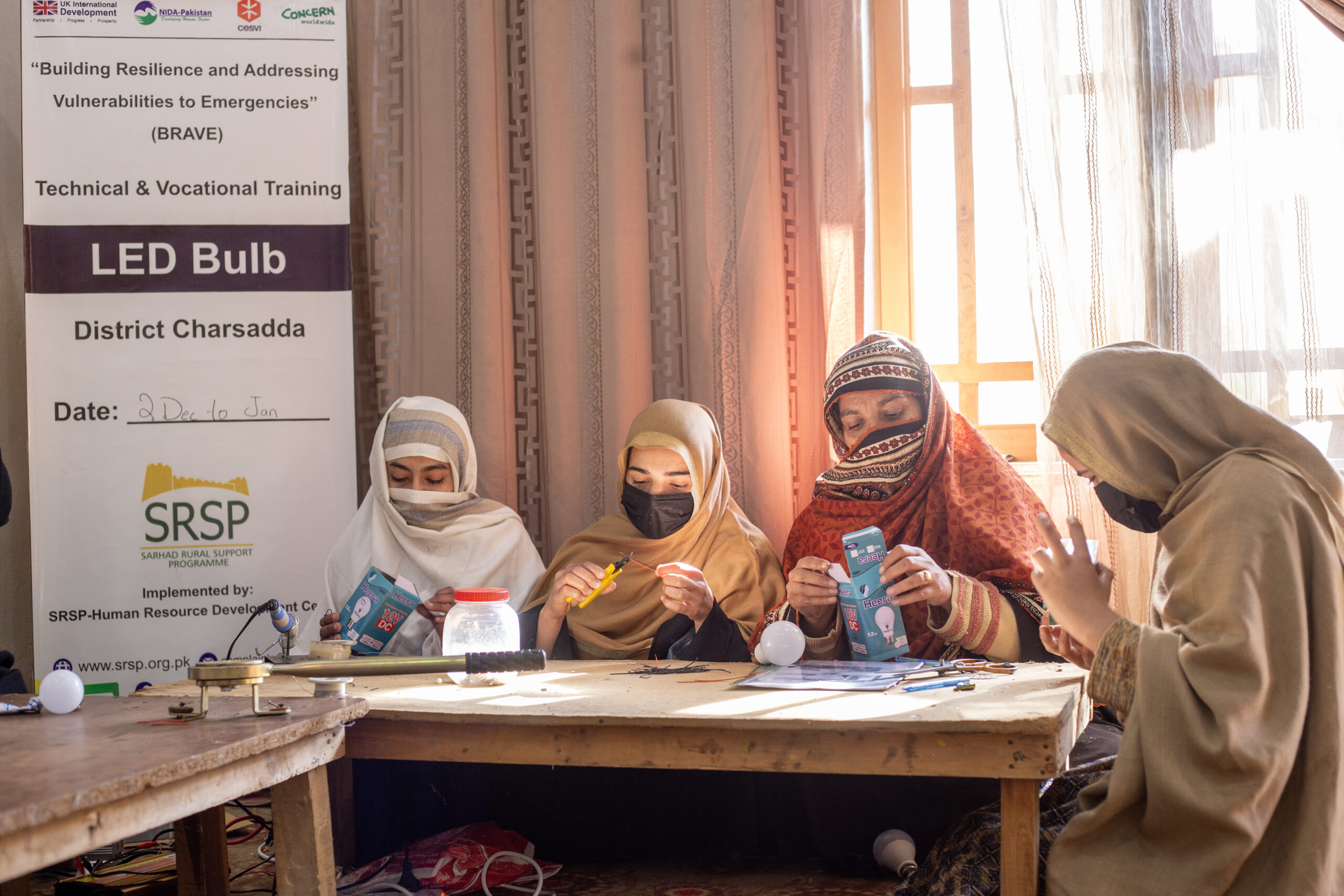
The initiative was designed in response to recurring climate-induced shocks—particularly floods—that had severely affected youth livelihoods and economic stability in the district. The project focused on equipping young women and men from flood-affected communities with market-relevant technical and vocational skills, enabling them to pursue resilient and climate-adaptive livelihood opportunities.
To strengthen the economic resilience of flood-affected youth by providing demand-driven technical and vocational skills, complemented by entrepreneurship, business management, and climate-adaptive livelihood approaches.
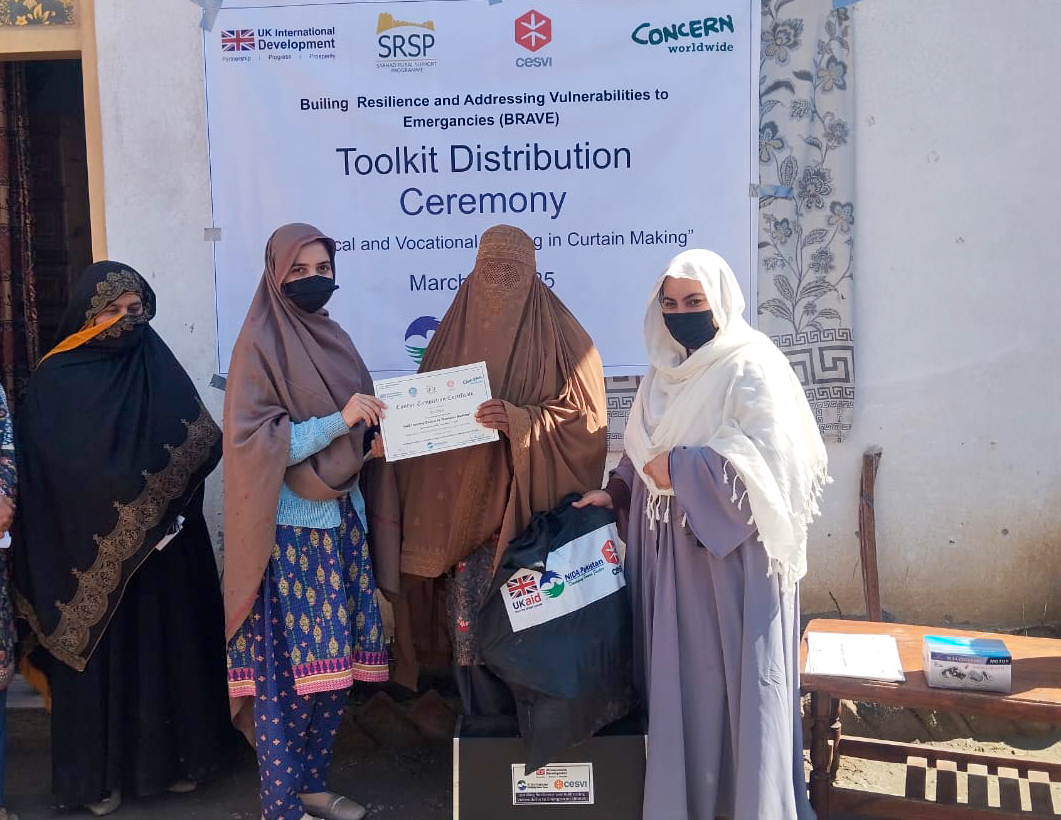
Recognizing youth as key drivers of community resilience and local economic recovery, the project integrated technical and vocational training with business and entrepreneurship development. The training curriculum included:
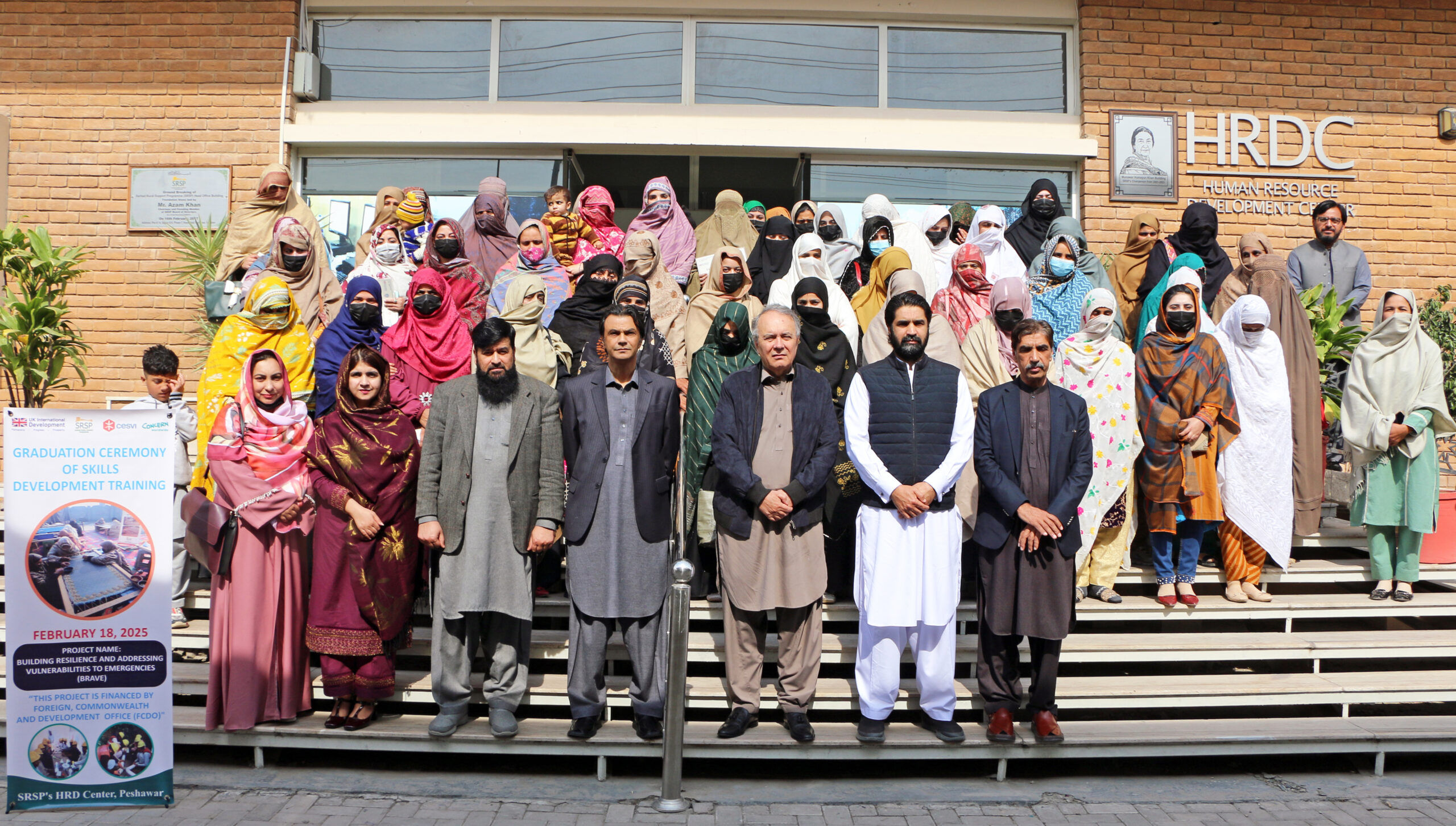
To ensure accessibility—particularly for young women—trainings were delivered close to communities through SRSP’s Human Resource Development Centre (HRDC) and decentralized training arrangements.
The Climate Resilience Component of the BRAVE Programme significantly enhanced youth employability and self-employment opportunities while strengthening household and community resilience to climate shocks. By combining technical skills development with entrepreneurship support and climate-adaptive practices, the project enabled sustainable income generation for youth and contributed to long-term economic recovery in flood-affected areas of District Charsadda.